
Concrete, Gravel, or Pavers: Which Foundation Is Best for a Gazebo?
Concrete, Gravel, or Pavers: Which Foundation Is Best for a Gazebo?
Choosing a gazebo is usually the enjoyable part of an outdoor project. You get to compare roof styles, railings, screens, colors, and sizes while imagining how the finished space will look in your yard.
Choosing the gazebo foundation may not be as exciting, but it can have a greater effect on how well the gazebo performs over time.
A properly prepared gazebo foundation keeps the structure level, distributes its weight, manages water, and reduces movement caused by changing soil conditions. The wrong foundation can lead to uneven floors, leaning posts, drainage problems, and costly corrections.
Concrete, gravel, and pavers are three commonly considered options. Each has advantages, but they are not interchangeable. The best choice depends on the gazebo’s construction, how the space will be used, the conditions of the property, and the manufacturer’s foundation requirements.
Why the Foundation Matters So Much
A gazebo is not simply outdoor furniture. It is a structure with weight concentrated around its posts, floor system, and perimeter. If one section of the base settles more than another, that movement can affect the entire building.
Doors or screens may stop closing correctly. Railings can become misaligned. Floorboards may feel uneven, and posts may no longer remain perfectly vertical. Water collecting beneath the gazebo can create additional problems, especially when the structure contains wood components.
These issues often begin below ground. Loose soil, buried organic material, poor compaction, erosion, and freeze-thaw cycles can all affect the base.
That is why a successful gazebo foundation begins with site preparation. Even the strongest material will not perform properly when it is installed over unstable ground or in an area where water regularly collects.
Gravel Foundations for Gazebos
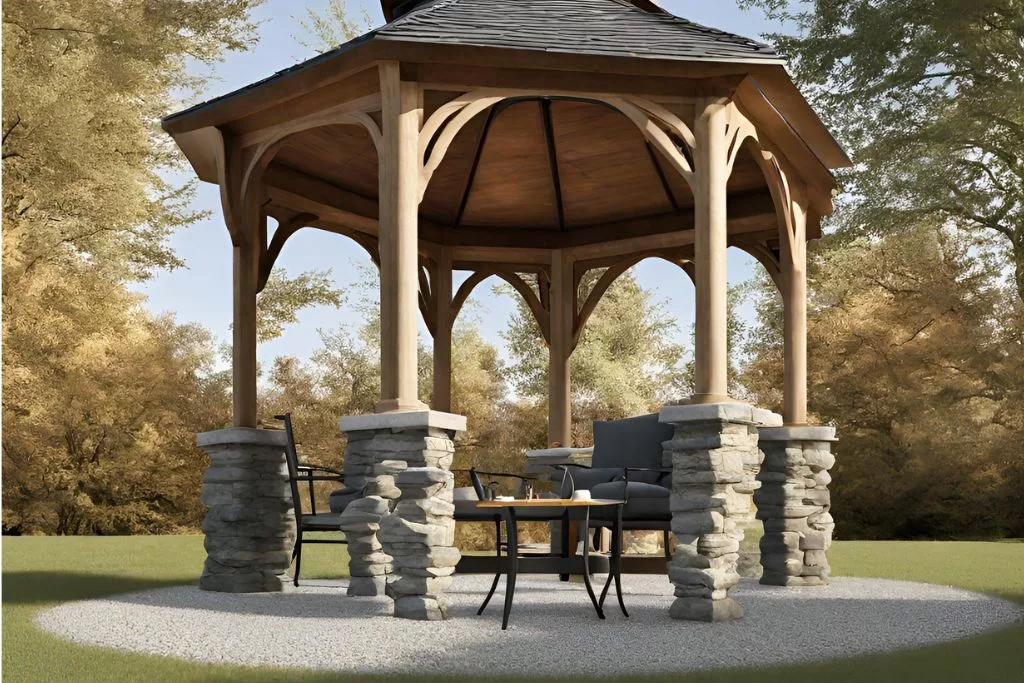
A professionally installed gravel pad is a practical choice for many prefabricated and freestanding gazebos. It creates a broad, level surface while allowing water to move through the stone rather than remain trapped beneath the structure.
This drainage is one of gravel’s greatest advantages. Rain can pass through clean stone and move away from the gazebo, helping reduce standing water and prolonged moisture exposure.
Firm Foundations installs gravel pads using basic site grading, anchored 4-by-6 perimeter timbers, pinned corners, and leveled 3/4-inch clean stone. Each pad is planned according to the structure’s dimensions, weight, location, and site conditions.
Advantages of a Gravel Gazebo Foundation
Gravel adapts well to many residential properties, including sites with moderate slopes. The foundation can be built up and leveled while the perimeter contains the stone and defines the finished area.
It also creates a clean border around the gazebo. This can help limit mud, weeds, and grass immediately next to the structure. The surrounding stone provides space for roof runoff to land without constantly saturating soil near the gazebo’s supports.
Gravel is often more economical than a full concrete slab. Installation may also involve less permanent alteration to the property, which can appeal to homeowners who want a dependable foundation without adding another large concrete surface to the yard.
Potential Limitations of Gravel
A gravel pad is only as dependable as the preparation beneath it. Stone placed directly over grass, topsoil, or soft ground can settle unevenly.
Water flowing across the site may also erode the soil around the perimeter or displace stone. The yard should be graded so runoff does not repeatedly wash through the foundation.
Gravel is also not a finished solid floor. When the gazebo does not include its own floor system, homeowners may prefer a concrete or professionally installed paver surface that can support chairs, tables, and foot traffic more comfortably.
The gazebo manufacturer should confirm whether the structure is designed to sit on a gravel pad and how it must be anchored.
Concrete Foundations for Gazebos
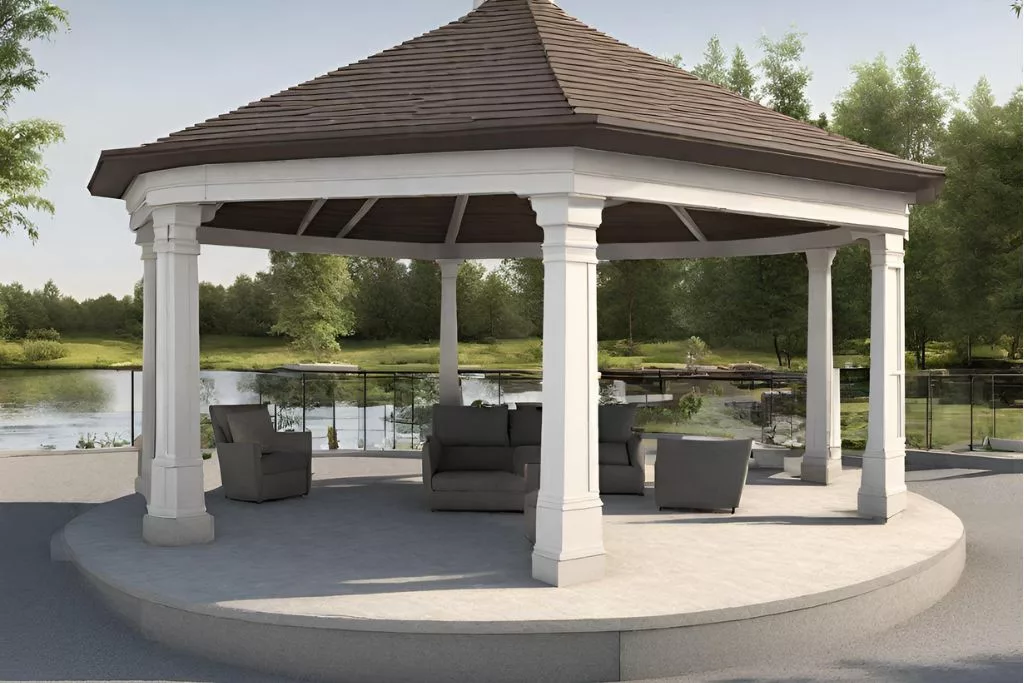
Concrete creates a rigid and permanent surface beneath the gazebo. It is often the preferred option when the gazebo will function as a substantial outdoor living space rather than a simple freestanding shelter.
A concrete pad can support dining furniture, grills, planters, screens, and other outdoor features while also serving as the finished floor. Chairs remain stable, the surface is easy to sweep, and the gazebo can feel more like an extension of a patio.
Firm Foundations provides professionally installed concrete foundations as well as gravel pads and excavation services. The company builds each foundation around the project rather than treating every outdoor structure the same way.
Advantages of a Concrete Gazebo Foundation
Concrete provides continuous support across the complete area. When it is correctly designed, reinforced, poured, and cured, it creates a durable base for a permanent gazebo.
It can also simplify anchoring. Many gazebo designs include post brackets or other connections intended to attach to concrete. The exact anchor locations and slab specifications should be confirmed before the concrete is poured.
A slab may be especially appropriate when the gazebo includes screens, electrical features, heavier furniture, or plans for frequent entertaining. It also creates a smooth transition when the gazebo will connect to an existing concrete walkway or patio.
Potential Limitations of Concrete
Concrete is usually more expensive than gravel and creates a permanent change to the yard. If the gazebo is moved or replaced in the future, the slab remains unless it is removed.
Concrete also requires careful drainage planning. Water does not pass through the slab, so the surface and surrounding grade must direct rain away from the gazebo. A poorly planned slab can send runoff toward nearby landscaping, the home, or the slab’s edges.
Cracking is another consideration. Minor surface cracks can occur as concrete cures and responds to temperature changes. More serious movement may develop if the soil beneath the slab was not properly prepared.
Because concrete is difficult to modify after installation, the gazebo’s exact dimensions, post positions, anchoring requirements, and finished height should be confirmed before work begins.
Paver Foundations for Gazebos
Pavers are attractive because they combine a usable floor with more visual variety than standard concrete. They can complement walkways, patios, retaining walls, and other landscaping.
Homeowners can choose from different shapes, textures, patterns, and colors. If the gazebo will be a decorative focal point, pavers may help the foundation feel like part of the overall landscape design.
Firm Foundations specializes in gravel pads and concrete foundations. Homeowners choosing pavers should work with an experienced hardscape or paver contractor who can build the complete base correctly.
Advantages of a Paver Gazebo Foundation
Pavers create a finished surface suitable for tables, chairs, and regular foot traffic. They can also be removed and reset if a limited area becomes uneven, something that is not as simple with a solid concrete slab.
Depending on the paver system, joints may allow some water to move between the individual units. Permeable paver systems can provide even greater drainage when they are specifically designed and installed for that purpose.
Pavers also offer the most design flexibility of the three options. The surface can extend beyond the gazebo to create additional seating space, a path, or a coordinated patio area.
Potential Limitations of Pavers
Pavers should not be placed directly on soil or a thin layer of sand. A dependable paver installation requires excavation, a properly compacted aggregate base, careful grading, bedding material, and edge restraint.
Without that preparation, individual pavers may sink, tilt, or separate. Movement beneath one gazebo post can affect the structure even when the rest of the paver area still looks acceptable.
The gazebo’s load must also be considered. A decorative patio surface is not automatically a structural foundation. The paver contractor and gazebo manufacturer should confirm how the posts will be supported and anchored.
Pavers may also require ongoing maintenance. Weeds can grow in joints, bedding material may wash out, and isolated areas may need to be reset after years of seasonal ground movement.
Which Option Is Best for Your Gazebo?
For many prefabricated gazebos with their own wood floor system, a professionally prepared gravel pad may provide the right combination of drainage, stability, and value.
For a permanent gazebo that will serve as a complete outdoor living area, concrete often provides the most practical finished surface. It is especially useful when the structure needs secure anchoring or will contain substantial furniture and features.
Pavers can be an excellent choice when appearance is a priority and the foundation is installed by a contractor who understands both hardscaping and the structural requirements of the gazebo.
The decision should not be based on appearance or price alone. Consider the gazebo’s weight, floor design, post layout, anchoring specifications, expected use, property slope, soil conditions, and drainage.
Evaluate the Site Before Choosing a Material
Watch the proposed location during heavy rain. Does water collect there? Does runoff cross the area? Is it near a downspout or the bottom of a slope?
A naturally wet location will not become suitable simply because a foundation is placed over it. Grading or excavation may be necessary to manage water before the base is installed.
Access should also be evaluated. Foundation equipment and the gazebo delivery crew may need to reach the site. Fences, narrow gates, septic systems, overhead wires, mature trees, and steep terrain can affect installation.
Permit and setback requirements vary by municipality. Homeowners should verify where the gazebo can be placed and whether the size or foundation type triggers any local requirements.
Coordinate the Foundation With the Gazebo Builder
Before scheduling the foundation, obtain the gazebo’s exact outside dimensions and manufacturer specifications. Ask whether the structure includes a floor, how the posts carry weight, and what type of anchoring is required.
The foundation contractor should also know where entrances, steps, ramps, and walkways will be located. Those details can influence the height and positioning of the pad.
Firm Foundations has been preparing gravel and concrete foundations since 2011 and works with homeowners and outdoor structure builders throughout Pennsylvania, Maryland, Delaware, and New Jersey. Customers frequently highlight the company’s communication, punctuality, workmanship, clear explanations, and cleanup after installation.
Give Your Gazebo the Right Start
There is no universal foundation that works best for every gazebo.
Gravel offers excellent drainage and reliable support for many structures with built-in floors. Concrete creates a durable, permanent surface suited to heavily used outdoor living spaces. Pavers offer design flexibility but depend on professional base preparation and proper structural support.
The right foundation begins with the gazebo manufacturer’s requirements and a careful assessment of the property. Taking time to address grading, drainage, dimensions, access, and anchoring before installation can prevent years of movement and maintenance problems.
Firm Foundations installs custom gravel pads and concrete foundations for gazebos and other outdoor structures within approximately 90 miles of Honey Brook, Pennsylvania. Request a free quote to discuss your gazebo, property conditions, and the foundation option that best fits your project.
Firm Foundations LLC
https://maps.app.goo.gl/Uf6XdgtpBTETgNrr7
1535 White School Rd, Honey Brook, PA 19344, United States
(717) 716-7267
https://shedpads.com/