
Pressure Treated Plywood Shed Floor Guide for PA & NJ
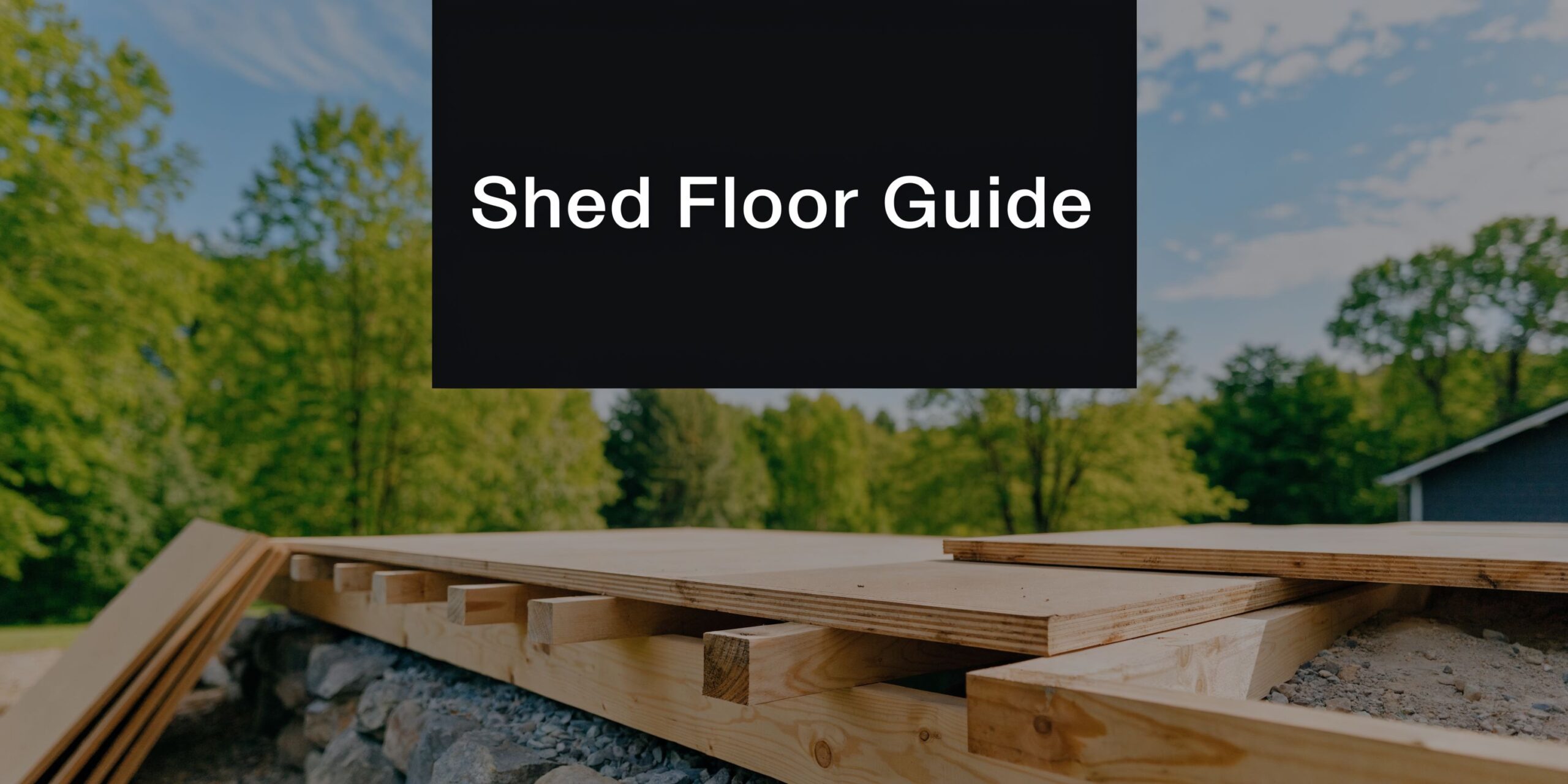
You’ve picked the shed. You know where it should go. Now you’re stuck on the part that decides whether that shed stays dry and solid, or starts feeling soft and uneven after a couple of seasons.
A pressure treated plywood shed floor offers a strong, practical choice for sheds, workshops, and storage buildings across Pennsylvania, Maryland, Delaware, and New Jersey. However, the plywood itself isn’t the whole story. The floor only performs as well as the base underneath it, the framing holding it up, and the moisture control built into the job.
In the Mid-Atlantic, that matters more than many homeowners expect. Wet ground, splash-back, freeze-thaw movement, and humid summers can punish a shed floor that looked fine on delivery day. Many floor failures blamed on “bad plywood” often start with a poor shed foundation, weak drainage, low clearance, or the wrong fasteners.
Homeowners searching for shed foundations near me, gravel shed foundation contractors near me, or a reliable base for storage shed are usually asking the right question, even if they don’t realize it yet. The core issue isn’t just what sheet good goes on top. It’s whether the whole shed foundation system is built to stay stable for years.
Why a Solid Shed Floor Matters in PA, MD, DE, and NJ
A shed floor takes more abuse than many assume. Lawn tractors, stacked totes, tool chests, freezers, feed bins, and workbenches all concentrate weight in small areas. If the floor flexes, holds moisture, or starts to settle, the rest of the shed follows.
Our climate is hard on shed floors
In PA, MD, DE, and NJ, the floor system has to deal with wet springs, summer humidity, leaf buildup around the perimeter, and winter ground movement. That’s why a shed floor should never be treated like a simple platform dropped on whatever looks flat enough.
A good floor starts with support and airflow. 3/4-inch pressure-treated plywood over 16-inch joist spacing is widely recommended for shed floor durability and rigidity, and those standards have been part of regional practice since at least 2011, as noted in this guide on plywood thickness for subfloor applications.
That spec matters, but it doesn’t solve drainage by itself.
The floor is part of a full shed foundation system
A lot of people shop for a shed the same way they shop for patio furniture. They compare sizes, windows, siding color, maybe door placement. Then they ask what kind of floor comes with it.
That’s backwards.
The smarter question is this: what is the shed sitting on, and how is water getting away from it?
Practical rule: If the base allows water to collect, the floor system will eventually tell on it.
For small storage buildings, a proper shed foundation gravel base provides an excellent mix of drainage, support, and serviceability. For heavier use, a slab may make more sense. For either one, the job has to start with excavation, grading, and a stable footprint.
Why homeowners run into trouble
Most failed shed floors follow the same pattern:
- Low clearance underneath: Air can’t move, so moisture lingers.
- Poor drainage around the shed: Splash-back keeps edges wet.
- Thin flooring panels: The floor starts to feel bouncy under normal storage loads.
- Weak framing: The sheathing gets blamed for movement that really starts in the joists or base.
That’s why homeowners looking for shed foundations contractors near me, garage foundation contractors near me, or concrete foundations are often solving more than one problem at once. The goal isn’t just a place to set the shed. It’s a stable, long-lasting platform that protects the structure above it.
Foundation First Prepping Your Shed Base for Success
A shed floor usually fails from the ground up, not from the top down. In PA, MD, DE, and NJ, humid air, wet soil, and freeze-thaw movement put more stress on the base than many homeowners expect. Pressure-treated plywood helps with decay, but it cannot correct a base that holds water, settles unevenly, or keeps the framing damp.
Three common options and what they really mean
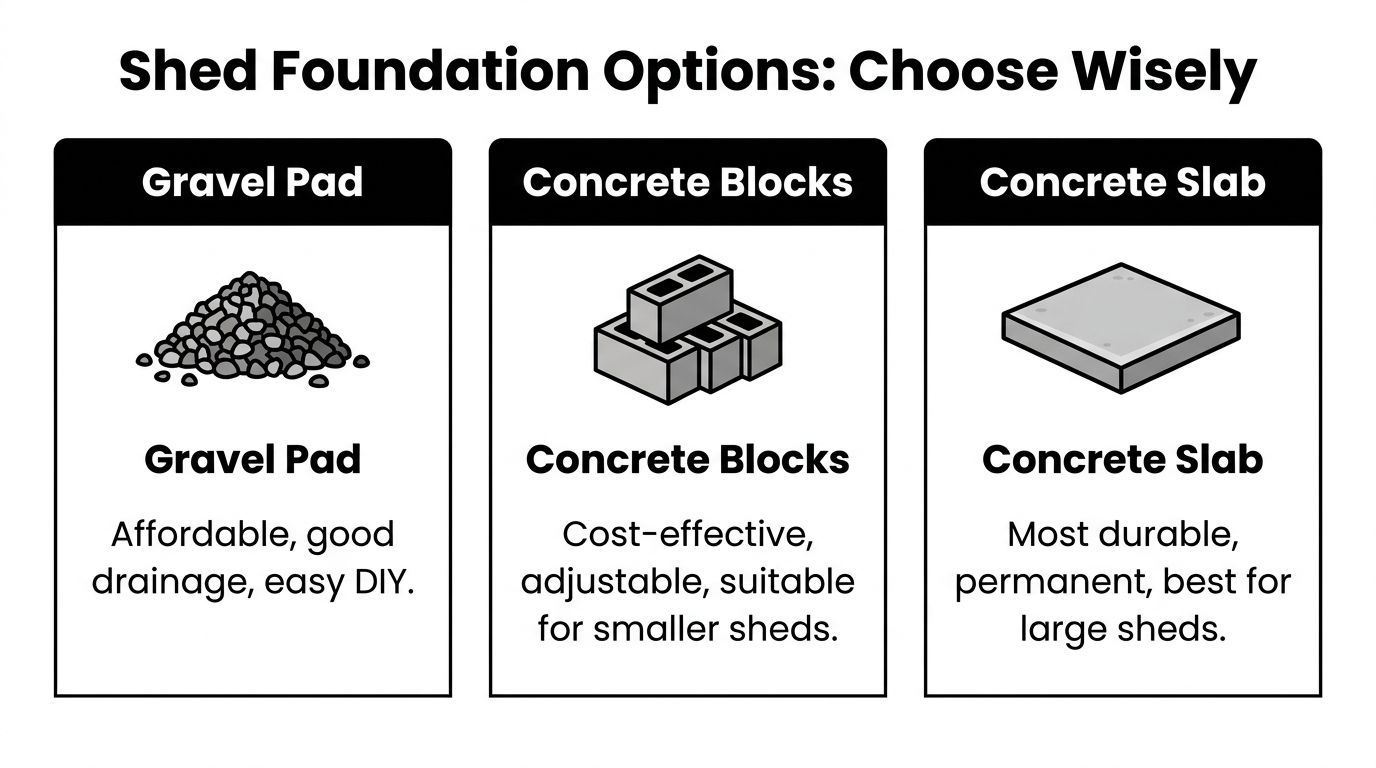
Most shed projects come down to three base types. Gravel pads fit a large share of backyard storage sheds. Concrete blocks still show up on small, lightly loaded buildings. Slabs make sense for heavier use or a more permanent structure.
| Foundation type | Best use | Main advantage | Main drawback |
|---|---|---|---|
| Gravel pad | Most storage sheds and many workshops | Drainage and practical cost | Requires proper excavation and compaction |
| Concrete blocks | Small sheds with light use | Simple setup | More movement, less consistent support |
| Concrete slab | Heavy-duty or permanent use | Very solid and durable | Higher commitment and less forgiving to change |
The trade-off is long-term stability. A shed can sit on any of these for a while. The question is how it handles wet seasons, summer humidity, and shifting soil after a few years.
Gravel pads solve problems plywood cannot
For a wood-framed shed floor, a properly built gravel pad proves to be an excellent fit. It sheds water, supports the structure evenly, and gives the underside of the floor a better chance to dry between storms. That matters in our region, where damp air lingers under buildings and keeps framing wet longer than people realize.
Homeowners searching for gravel shed foundation contractors near me in Honey Brook Township are usually trying to avoid soft spots, musty smells, and floor edges that stay wet. A well-prepared stone base addresses those issues better than surface blocks set over lawn or topsoil.
Leveling still matters. So does compaction. For a good overview of what professional pad preparation involves, this breakdown of steps for sheds is useful because it shows how much of the job happens before the structure ever arrives.
Concrete blocks are common, but they are often asked to do too much
Blocks can support a small shed with light contents if the soil is stable and the layout is done carefully. I would not trust them for a larger storage building, a workshop, or anything expected to stay square through repeated wet and dry cycles.
The weak point is inconsistent bearing. One block settles a bit, another stays put, and the floor frame starts twisting. Homeowners then blame the plywood, even though the primary problem started below it.
That uneven support also creates a moisture problem. Low corners trap humid air and reduce clearance under the shed. Once the underside stays damp, pressure-treated panels and joists are working in harsher conditions than they should.
Concrete slabs fit some projects better
A slab makes sense for equipment storage, a mower shed, or a workshop that needs a hard finished surface. It removes the wood floor system from the equation, but it raises the stakes on excavation, forming, drainage, and final dimensions.
Slabs are less forgiving if plans change later. Door locations, anchors, and finished elevations need to be right the first time. For some homeowners, that permanence is a benefit. For others, a gravel base with a framed floor gives more flexibility.
What proper site prep includes
The best-looking shed in the neighborhood will not outlast bad prep. Solid base work usually includes:
- Excavation to remove topsoil and soft material
- Defined pad edges that hold the footprint in place
- Compacted stone or properly prepared subgrade
- Drainage that moves water away from the shed
- Tight final leveling so installers are not correcting grade with shims
Material selection matters here too. Homeowners comparing treated framing should understand what pressure treated wood is, but the bigger issue is how that wood performs over a damp or unstable base. In our climate, trapped moisture also increases the risk of warped panels and faster fastener corrosion if the wrong hardware is used.
What works best in our area
Across much of Pennsylvania, Maryland, Delaware, and New Jersey, moisture control usually decides the best base.
For many properties, the strongest choices are:
- Gravel pad for a standard storage shed with a framed wood floor
- Concrete slab for heavier equipment, workshop use, or a more permanent building
- Avoiding surface blocks alone for anything larger or heavier than a very small garden shed
If you are comparing shed foundation blocks, a shed foundation kit, or a more permanent gazebo foundation, the same rule applies. Keep water moving away from the structure, keep support consistent under the frame, and give the floor system room to stay dry. That is what makes a pressure-treated plywood floor last.
Selecting Plywood and Framing for Your Shed Floor
Once the base is right, the next decision is the floor assembly itself. Often, people try to save a little and end up rebuilding a lot.
The strongest setups keep things simple. Use the right joists, the right panel thickness, and hardware that won’t fight the treatment chemicals in the wood.
Start with the joists, not the plywood
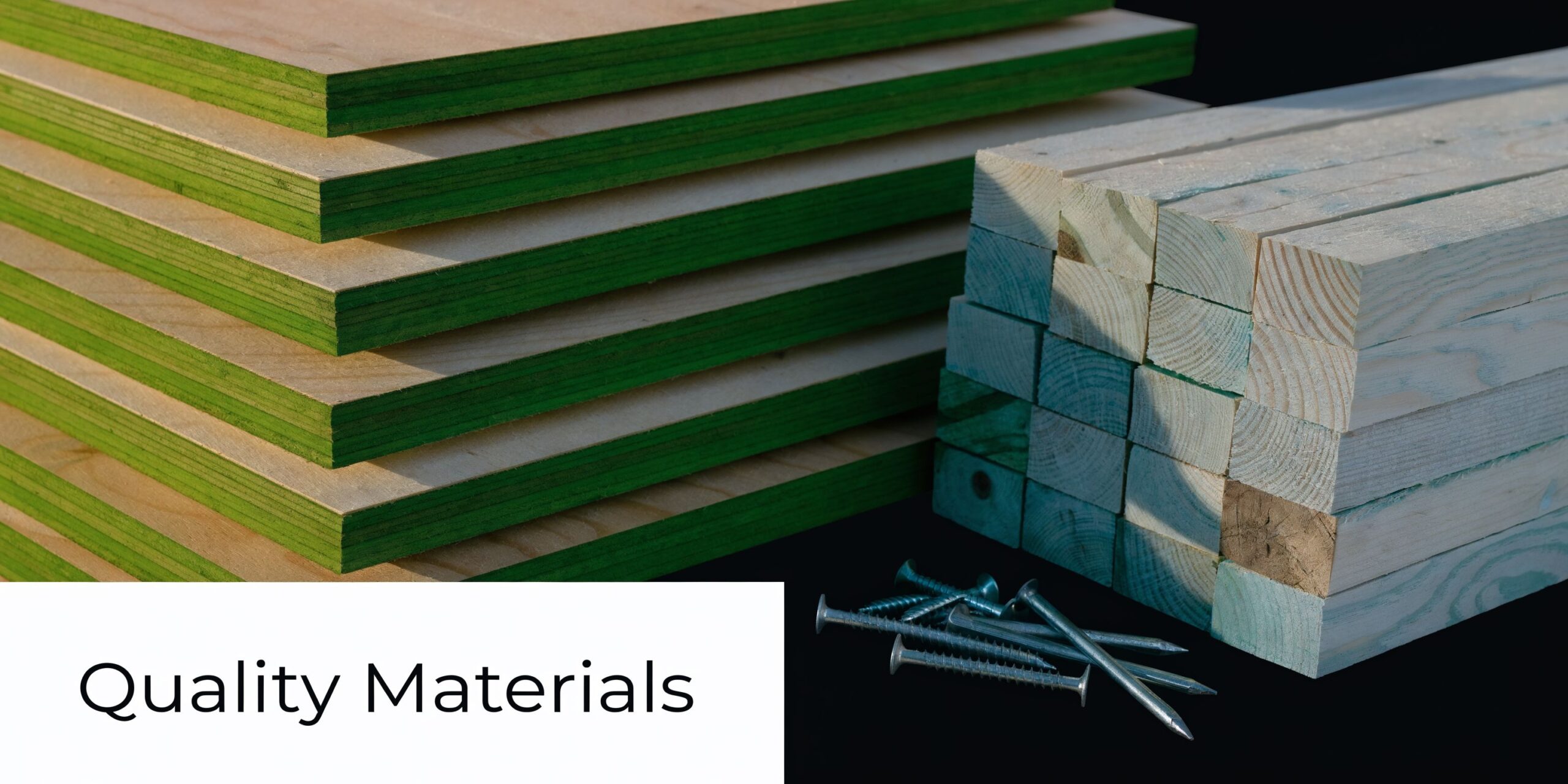
A plywood floor can’t feel solid if the frame underneath feels weak. Builders commonly recommend pressure-treated 2×6 joists instead of 2x4s for added stability, with 16 inches on-center as the standard spacing, and 12-inch or 8-inch spacing for heavier-duty use, according to this overview of best flooring options for a durable shed.
That’s one of the cleanest upgrades you can make on a shed project.
For homeowners planning to store heavier equipment, that extra framing depth and tighter spacing make a significant difference in how the floor feels underfoot. If you want a practical reference for joist capability, this guide on 2 x 6 floor joist span helps explain why floor framing choices matter before the sheathing goes down.
What plywood to buy
For most shed floors, the reliable choice is 3/4-inch exterior-rated plywood, ideally tongue-and-groove if the floor system is designed for it.
Use plywood rated for outdoor exposure, such as CDX or ACX, depending on whether appearance matters. If you want a plain-language explanation of what pressure treated wood is, that resource gives a useful overview of why treatment is used and where it makes sense.
A few practical buying rules:
- Choose 3/4-inch thickness: It’s the standard worth paying for.
- Stick with exterior-rated panels: Interior plywood doesn’t belong in a shed floor.
- Use tongue-and-groove when possible: It supports the long edges between joists better than square-edge sheets.
- Inspect sheets at the yard: Reject badly warped panels before they ever get loaded.
Don’t use the wrong fasteners
Pressure treatment protects wood, but it can also be hard on metal hardware if you choose the wrong type. That’s one of the most overlooked parts of a pressure treated plywood shed floor.
Use corrosion-resistant fasteners that are compatible with treated lumber. In practice, that usually means hot-dipped galvanized or stainless hardware, not bargain fasteners with light coating.
Field note: Good wood with bad fasteners still turns into a bad floor.
A simple material checklist
If the goal is a durable shed floor for PA, MD, DE, or NJ, the shopping list should look close to this:
- Framing: Pressure-treated 2×6 joists
- Spacing: 16 inches on-center for standard use, tighter for heavier loads
- Decking panel: 3/4-inch exterior-rated plywood
- Panel edge: Tongue-and-groove when available
- Fasteners: Corrosion-resistant nails or screws
- Cut-end treatment: Preservative for every fresh cut
The temptation is always to downgrade one item. Usually it’s the sheathing thickness, joist size, or hardware. Those are exactly the places where a floor starts to feel cheap, even when the shed itself looks great from the outside.
Your Step-by-Step Plywood Floor Installation Guide
A shed floor looks acceptable on install day. The problems show up after a humid summer, a wet fall, and a freeze-thaw cycle or two. In PA, MD, DE, and NJ, that is where sloppy panel layout, trapped moisture, and the wrong fasteners start to show themselves.
Start with a square, supported frame
Before any plywood comes out of the stack, confirm the floor frame is flat, square, and fully supported on the base you already prepared. A small framing error at this stage turns into uneven seams, soft spots, and panels that fight you all the way through the install.
Set the perimeter first. Measure diagonals. Sight the tops of the joists. If one crown is high or one support point is low, fix it now. Plywood follows the frame you give it.
On most shed floors, the sequence is straightforward:
- Lay out the perimeter frame on the finished base.
- Check corner-to-corner measurements for square.
- Install joists at the planned spacing.
- Align crowns so the top plane stays even.
- Recheck bearing and level before sheathing starts.
The goal is simple. Every panel should land flat without being pulled into place by fasteners.
Keep the assembly able to dry
Pressure treatment helps with decay. It does not stop wood movement.
APA, the Engineered Wood Association, explains that plywood panels need proper spacing and site conditions that let them handle normal moisture-related expansion and contraction in service. That guidance matters in our region because summer humidity and poor airflow under a shed can push panels to swell, cup, or stay damp longer than they should. See APA's installation guidance for wood structural panels: APA panel installation recommendations.
If the build calls for a ground moisture barrier or another under-floor moisture control layer, install it neatly and keep it intact. Tears, gaps, and bunching waste the effort. I would rather see a simple moisture-control detail installed correctly than a complicated one done halfway.
Lay the plywood out before fastening
Dry-fit the first sheet and make sure the layout works before you drive a single screw or nail. Start from the straightest, most visible edge of the frame, usually the front. If the first panel is out of square, the rest of the floor follows it.
Stagger end joints where the framing layout allows. Keep every panel edge supported. If you are using tongue-and-groove panels, engage the joint fully without crushing the tongue. A sledge and a scrap block can wreck an edge faster than many homeowners expect.
The National Association of Home Builders notes that proper panel layout, support, and fastening are part of a floor system that stays stiff and serviceable over time. Their floor framing overview is a good reference for the sequence and support details: NAHB floor framing practices.
Fasten for holding power and corrosion resistance
Use the fastener type specified for treated lumber and exterior exposure. In this climate, I prefer corrosion-resistant screws for many shed floors because they pull panels tight and make it easier to correct a sheet that shifts during install. Hot-dipped galvanized hardware is commonly used. Stainless is a better choice near salt air or consistently wet locations.
The International Code Council evaluation reports for common treated-wood systems warn that fastener compatibility matters because modern treatment chemicals can be corrosive to some metals. Use hardware listed for contact with preservative-treated wood. One example is Simpson Strong-Tie's treated wood connector and fastener guidance: fastener compatibility for preservative-treated wood.
A clean fastening routine looks like this:
- Pull each sheet tight to the framing before fastening off
- Start fasteners in the field, then finish edges
- Keep spacing consistent across every panel
- Set heads flush, not buried through the face
- Refasten any edge that lifts or sounds hollow underfoot
This video gives a useful visual example of floor framing and panel placement on a shed build:
Seal every field cut and exposed edge
Factory treatment does not protect the wood you expose with a saw. Whenever you cut a sheet around a door opening, rip the last panel in a row, or trim framing, coat the fresh cut with a field-applied preservative labeled for treated wood.
The American Wood Protection Association states that cut ends, drill holes, and other field-made penetrations in treated wood should be protected with a suitable preservative. That is standard practice on jobs meant to last, especially where the floor sees splash-back or high humidity. See AWPA guidance here: AWPA field treatment recommendations.
This step is easy to skip. It is also one of the easiest ways to protect the most vulnerable part of the panel.
Check the floor before the walls go up
Walk the whole surface. Listen for squeaks. Look across the seams in low light. A proud edge, a missed fastener line, or a panel that never seated fully is much easier to fix before the shed is built on top of it.
My checklist is short:
- No bounce at panel joints
- No unsupported edges
- No loose or overdriven fasteners
- No raw cut edges left unsealed
- No spots where splash-back can sit against the floor system
A good pressure-treated plywood shed floor is never just about rot resistance. It has to stay flat, hold fasteners, and dry between storms. That starts under the plywood, with the base and framing, and it finishes with careful installation.
Common Shed Floor Mistakes and How to Avoid Them
Many homeowners assume pressure-treated plywood solves moisture problems. It doesn’t. It resists decay better than untreated material, but it still has to dry, stay supported, and work with compatible hardware.
That matters even more in the humid Mid-Atlantic.
Mistake one is solving the wrong problem
A frequently overlooked issue is that pressure-treated plywood can retain moisture and develop warping, cupping, and fastener corrosion within 1 to 2 years when the underlying moisture problem hasn’t been solved, as discussed in this builder forum conversation about subfloor pressure-treated plywood.
That’s why it’s a mistake to treat pressure treatment as a substitute for drainage. If the shed sits low, traps wet air, or gets constant splash-back, the plywood can still move enough to cause trouble.
Mistake two is using the wrong hardware
Modern treated wood can be hard on fasteners. If someone uses light-duty hardware or the wrong coating, corrosion can show up early.
The symptoms are familiar:
- Rust streaks around fastener heads
- Loose flooring at panel edges
- Dark staining around connectors
- Squeaks or movement where panels should be tight
The fix is simple in theory. Use corrosion-resistant fasteners from the start. The hard part is that many DIY kits and leftover jobsite buckets don’t include the right ones.
Mistake three is trusting surface-level flatness
A shed can look level and still be poorly supported. That happens when support points are uneven or when the ground under a block setup starts shifting at different rates.
The floor doesn’t fail all at once. One corner settles, one seam opens up, one door starts rubbing, and then the whole building feels older than it is.
Therefore, the base under the shed holds more importance than whether the sheet is branded as treated.
Mistake four is expecting PT plywood to behave like dry interior subfloor
Pressure-treated material can be more temperamental. It may bow, check, or cup more than standard exterior plywood if it goes down wet or if air movement under the shed is poor. That doesn’t make it unusable. It means the installer has to account for real jobsite conditions.
What works better:
- Store material flat before installation
- Don’t rush wet panels into a tight assembly
- Give the floor system ventilation
- Solve site drainage before building the floor
For many homeowners, the biggest surprise is this: a long-lasting shed floor isn’t primarily about finding the toughest plywood. It’s about building a system that doesn’t keep the plywood wet.
Extending Your Shed Floor's Life and When to Call a Pro
A good floor doesn’t need constant attention, but it does need basic care. Keep the inside dry, keep the shed perimeter clear, and don’t let mulch, soil, or leaf buildup trap moisture against the base.
If the floor is exposed to spills, traffic, or workshop use, a protective coating helps. Many shed owners compare floor maintenance to deck maintenance because the same idea applies. Water, sun, and wear all work on wood over time. This article on how long a wood deck lasts is useful for understanding why maintenance and moisture exposure affect service life so much.
Simple habits that help
- Seal or coat the surface when appropriate: Especially in workshop-style sheds.
- Keep airflow around the shed: Don’t let landscaping choke off ventilation.
- Watch the edges first: That’s where water exposure tends to show up.
- Check doors and floor feel seasonally: New rubbing or soft spots usually point to movement somewhere.
When it’s time to hand it off
Some parts of a shed floor project are manageable for a careful homeowner. Others are best left to a crew with excavation equipment, grading tools, forms, and experience reading site conditions.
It makes sense to call a pro when:
- The site holds water.
- The ground slopes or feels soft.
- The shed is large or heavy-use.
- You’re pairing the job with a slab, garage foundation, or other permanent structure.
- You want the project done once, not twice.
That’s especially true for homeowners searching shed foundations near me, excavation near me, driveway contractors near me, or related foundation builds. Once the job involves drainage, grading, compaction, and structural support, the base becomes the most important part of the project.
Shed Floor FAQs for PA and NJ Homeowners
Can I paint or seal a pressure treated plywood shed floor?
Yes, if the product you choose is appropriate for that use and the wood is ready for it. For a work shed or storage building, a protective coating can help with cleanup and day-to-day wear. The key is following the coating manufacturer’s instructions and making sure the floor surface is clean and dry enough for good adhesion.
Is OSB a good cheaper substitute for a shed floor?
In this region, it usually isn’t the best bet for long-term peace of mind. For sheds in wet or humid conditions, plywood is generally the safer choice because it handles moisture exposure better when the assembly is built correctly. If the shed will store tools, equipment, or anything heavy, the stronger path is still a well-supported plywood floor over a properly prepared base.
Do I need a permit for a shed foundation in PA, MD, DE, or NJ?
Sometimes yes, sometimes no. Requirements vary by township, borough, county, structure size, setbacks, and whether the foundation is gravel, blocks, or concrete. A 10×10 storage shed may be treated differently from a larger barn-style building or a slab-supported structure.
What’s the best base for storage shed use in our area?
For many homes, a properly installed gravel pad is the most practical answer. It supports the shed well and helps with drainage. For heavier-duty buildings, a slab may be the better fit. The right answer depends on the site, the shed size, and what you plan to keep inside.
Is a pressure treated plywood shed floor always the best option?
Not always. It’s a good option when the shed uses a framed floor system and the site drainage is handled correctly. If the structure will carry heavier loads or function more like a garage or permanent workshop, a concrete floor may make more sense from the start.
If you’re planning a shed, garage, gazebo, or other outbuilding in Pennsylvania, Maryland, Delaware, or New Jersey, Firm Foundations can help you start with the part that matters most. We build durable gravel pads, concrete foundations, and properly prepared shed bases that are made for long-term performance, not short-term appearance. If you want a clear quote, honest guidance, and a foundation built to the right specs for your site, reach out and get the project started the right way.