
Outdoor Storage Shed Plan: A PA/MD/DE/NJ Guide for 2026

You find a shed you like online. The doors are right, the roofline looks good, and the size seems close enough for the mower, bikes, and all the things crowding your garage.
Then questions arise. Where exactly should it go? Does the ground need to be leveled? Do you need a gravel pad, shed foundation blocks, or a concrete slab? Will your township, borough, county, or HOA let you build it there at all?
That is where most outdoor storage shed plan articles fall short. They show the shed. They skip the part that decides whether that shed stays level, dry, and easy to use.
For homeowners in Pennsylvania, Maryland, Delaware, and New Jersey, that missing piece matters. Our region deals with wet seasons, freeze and thaw cycles, mixed soil conditions, and local code rules that can change from one municipality to the next. A nice-looking shed on a weak base is still a bad project.
Sheds are not a niche purchase anymore. The Grand View Research residential outdoor storage market report states that the global residential outdoor storage market was valued at USD 1.52 billion in 2022 and is projected to grow at a 4.0% CAGR from 2023 to 2030, with sheds holding the largest revenue share at 58.1% in 2022. More homeowners are adding backyard storage. The ones who stay happy with the result usually plan from the ground up.
Your Perfect Shed Starts with a Solid Plan Not Just a Picture
A homeowner picks a prefab shed online and assumes the hard part is over. The next weekend, they walk the yard with a tape measure, realize the chosen spot is sloped, and start searching for answers on shed foundation gravel base, excavation near me, and shed foundations contractors near me.
That pattern is common because most plans focus on framing, siding, roof pitch, and door hardware. They give very little attention to the base for storage shed work that keeps the structure stable.

The picture is not the project
A shed listing can make the build look simple. It usually shows a clean structure on a perfectly flat lawn with no mention of runoff, soft topsoil, or access for delivery.
Real yards are different. One side may hold water after rain. The easiest corner to reach may sit too close to a property line. The flattest area may be the worst place for drainage.
An outdoor storage shed plan needs to answer practical questions first:
- What will the shed hold. Garden tools, bikes, a mower, a workbench, or equipment that needs a wider door.
- How often will you use it. Daily use changes the ideal location.
- How permanent is the structure. A small seasonal shed and a heavy barn shed do not need the same base.
- What kind of access matters. Wheelbarrows, riding mowers, and delivered prefab sheds all need room to move.
The foundation is the quiet part that does the hard work
Homeowners usually notice a bad foundation later. The first signs are small. A door rubs. Water pools near the entrance. One corner settles. Shelves look out of level.
By the time those problems become obvious, the fix is larger and more expensive than getting the foundation right the first time. That is why a good shed plan starts below grade, not at the roofline.
A good-looking shed can hide a bad base for months. The ground always tells the truth eventually.
If you are planning a 4×8 shed with foundation blocks, a 10×10 storage shed on gravel, or a larger building that functions like a small garage, the same rule applies. Treat the foundation as part of the shed, not as an afterthought.
What works better in real backyards
The best projects start with a simple sequence. Decide the use, pick the size, verify the location, and match the foundation to the load and soil conditions.
That approach saves homeowners from the most common mistake. They buy the shed first and try to force the yard to fit it later.
Choosing Your Sheds Size and Perfect Spot
The right shed size is not just about fitting your stuff. It is about how the building sits in your yard, how easily you can use it, and what kind of foundation makes sense under it.
The Freedonia Group study on sheds and outdoor storage notes that in the US market, sales of outdoor storage sheds are forecast to rise at an annual rate of 5.8% to reach USD 2.7 billion by 2029. It also points to common size ranges: 8×10 sheds as entry-level options, 12×16 to 12×20 as medium formats, and 12×24 units as garage alternatives.
Start with what the shed needs to do
An 8×10 works for many homeowners who need a clean place for lawn tools, bins, and a push mower.
A medium shed such as a 12×16, 12×18, or 12×20 gives you room to move around inside. That matters if you want shelves, a small workbench, or space for larger seasonal equipment.
A 12×24 starts acting more like a garage substitute. At that size, your base for storage shed work needs more careful planning because the building is larger, heavier, and more visible in the yard.
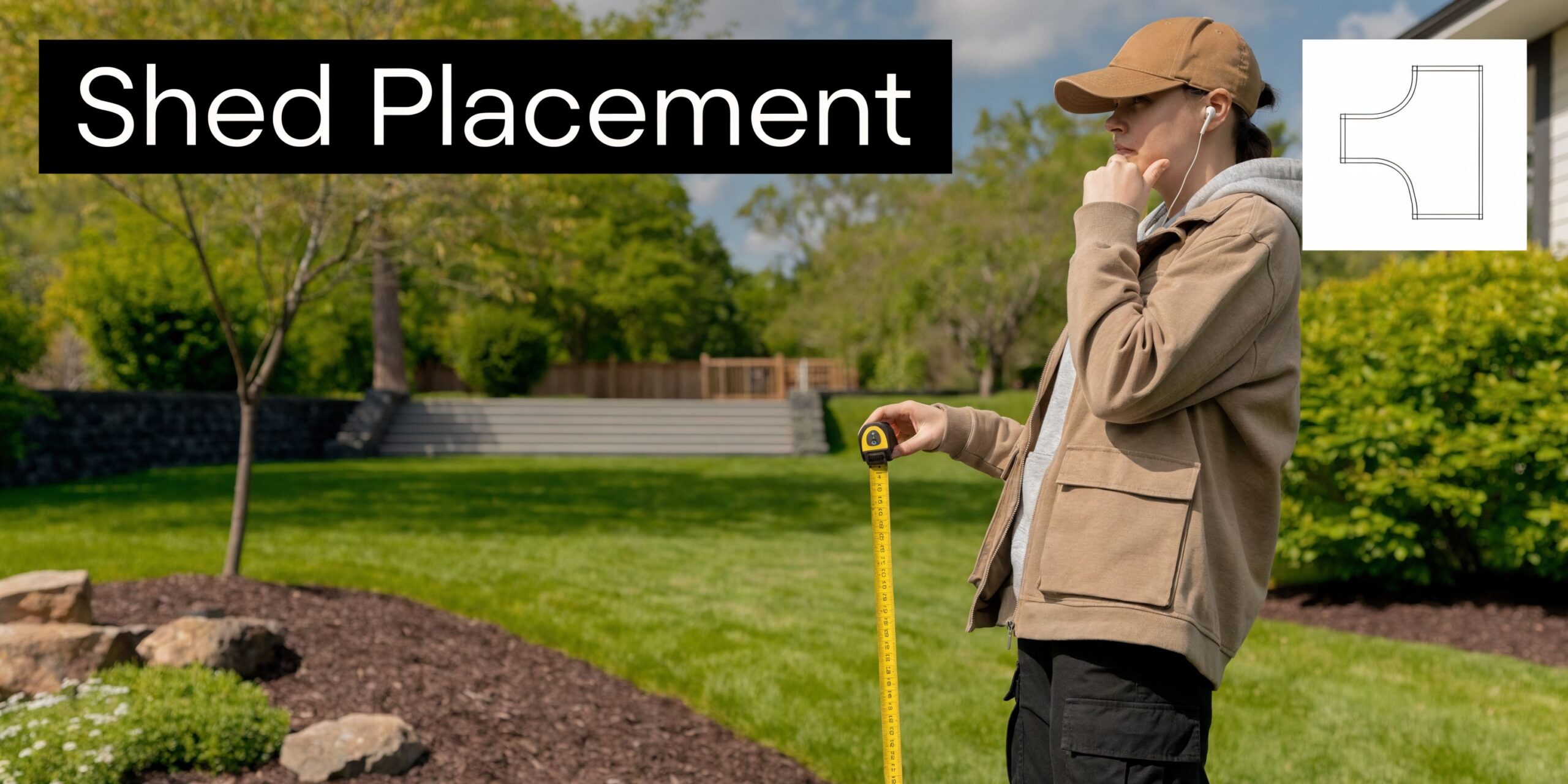
Mark the footprint before you buy
Do not trust your eye. Use stakes, marking paint, or even spare boards to lay out the exact footprint.
Walk around it. Open an imaginary door. Push an imaginary mower through the entrance path. Stand at the driveway and look at the sightline.
This quick exercise reveals problems that a product photo never shows.
- Check clearance around doors: You need room to swing or slide the doors and carry awkward items in and out.
- Think about paths: A shed tucked behind a fence may look neat but become annoying if every trip requires a tight turn.
- Protect usable yard space: A shed should support your yard, not make the rest of it harder to enjoy.
Pick the spot with drainage in mind
The easiest place to build is not always the best place to keep a shed dry. Low areas collect water. Soft edges near downspouts stay wet. Ground that looks flat can still channel runoff toward the shed during a storm.
If a location stays muddy after rain, that is useful information. It tells you the ground already has a drainage problem. Setting a shed there without proper site prep is asking for a wet floor, rotted trim, and shifting support.
The ideal shed location is usually the spot that balances convenience, drainage, and code setbacks. If one of those is missing, the project starts compromised.
Watch the slope before you think about style
Sloped ground is manageable. Ignoring slope is what causes trouble.
A slight grade may still be workable for a gravel shed foundation or a formed concrete pad, but it affects excavation, retaining edges, access ramps, and drainage flow. The steeper the yard, the more important it becomes to plan the base before ordering the shed.
A simple yard check before finalizing your outdoor storage shed plan
Use this checklist in your own yard:
- Measure the structure footprint and include door swing and working space.
- Look for standing water after rain or signs of erosion.
- Check delivery access if the shed is prefab.
- Note nearby trees that may drop roots, shade the area, or interfere with the roof.
- Confirm daily convenience so the shed is easy to use year-round.
A smart location can make a smaller shed feel more useful. A poor location can make even a well-built shed frustrating from day one.
The Foundation Decision Gravel Concrete or Skids
An outdoor storage shed plan stops being decorative and starts becoming durable at this point.
Gravel base for most residential sheds
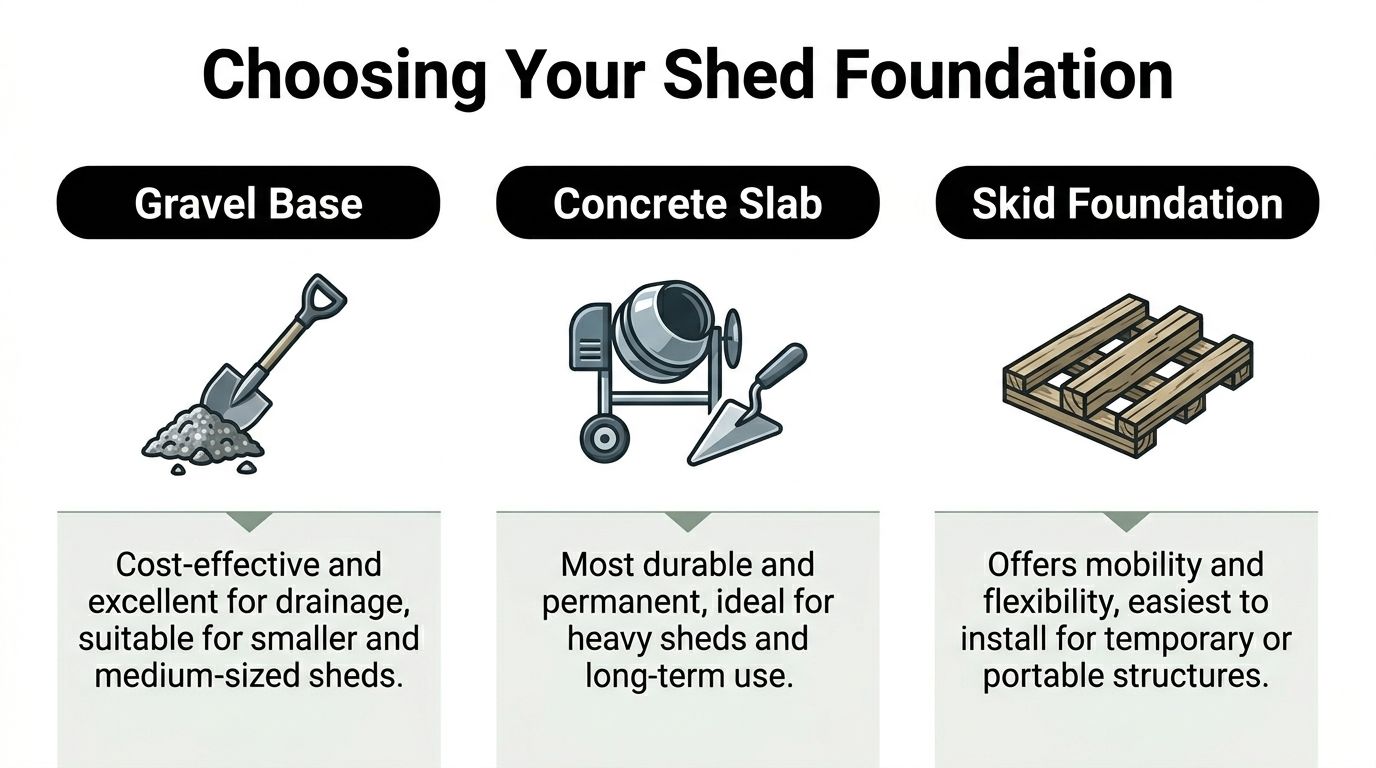
For many sheds in Pennsylvania, Maryland, Delaware, and New Jersey, a gravel pad is the most balanced option. It drains well, handles frost conditions better than many homeowners expect, and works for a wide range of common shed sizes when built correctly.
The verified benchmark in the shed foundation gravel pad methodology reference states that a properly executed gravel pad can achieve over 95% success rates in preventing settling. The process includes excavating 6 to 8 inches, compacting a 4-inch base of crushed stone to 95% Proctor density, and using geotextile fabric to limit common failures.
That sequence matters. Many DIY builds skip at least one of those steps.
Why gravel works
A good gravel shed foundation does three jobs at once. It spreads the load, helps water move away from the structure, and gives you a level base that does not trap moisture against the shed floor.
For common residential sizes, that is often the most practical answer.
Where DIY goes wrong
Homeowners often build what looks like a gravel pad but is really just loose stone dumped on grass. That is not the same thing.
A durable pad needs excavation, edge control, proper stone, compaction, and level checking. If the crew skips the fabric or does not compact lifts correctly, the pad may look fine on day one and settle unevenly later.
Gravel is not the cheap version of a foundation. A properly built gravel pad is a professional foundation system.
Concrete slab for heavier use and long-term permanence
Some projects need more than gravel. If the shed will carry heavier point loads, act like a workshop, or function more like a small garage foundation, reinforced concrete becomes the stronger choice.
A concrete slab also makes sense when the owner wants a highly permanent structure with a finished floor surface and minimal movement.
Later in the build process, that slab must be handled with real precision. Poorly executed concrete does not become premium just because it is hard.
The video below shows the kind of planning homeowners should understand before choosing a slab.
What concrete is best for
Concrete foundations fit projects such as:
- Garage-style storage: If the building stores heavier equipment or works like a small vehicle bay.
- Barn shed use: When the structure has more load and more daily wear.
- Permanent accessory structures: When mobility is not a goal and a long-term slab is preferred.
A slab can also support related projects like a gazebo foundation or cement foundations for garage structures where a finished base matters.
Skids and shed foundation blocks for small temporary setups
Skid foundations and shed foundation blocks can work for lighter, smaller, or more movable structures. They are simple, and they appeal to homeowners who want a lower-commitment approach.
But they have limits. They depend heavily on the ground below them, and they are less forgiving when the site has soft soil, drainage problems, or a noticeable slope.
For a very small structure used lightly, skids may be fine. For a larger shed that stores expensive equipment and needs to stay square over time, they are often a weak compromise.
Shed Foundation Comparison Which Base is Right for You
| Foundation Type | Best For | Typical Lifespan | Cost Factor | Drainage |
|---|---|---|---|---|
| Gravel Base | Small to medium sheds, many prefab sheds, general backyard storage | Long-lasting when installed correctly | Moderate | Excellent |
| Concrete Slab | Heavy sheds, workshop use, garage-style storage, highly permanent structures | Very long-lasting when installed correctly | Higher | Good if grading and drainage are handled well |
| Skid Foundation | Smaller portable sheds, lighter-duty temporary setups | Depends heavily on site conditions and maintenance | Lower | Variable |
If you are still comparing layouts and base options, these plans for outdoor shed projects can help you think through how the structure and foundation need to work together.
What works best in PA MD DE and NJ
In this region, drainage and frost behavior drive the decision more than appearance does. A gravel shed foundation is often the practical sweet spot for standard residential sheds. A reinforced slab becomes the right answer when the load, permanence, or use case moves beyond ordinary storage.
What does not work well is choosing a base because it seems easiest. The ground does not care which option looked simpler online.
Navigating Permits and Local Codes in PA MD DE and NJ
A shed can be small enough to feel informal and still trigger real code issues. That is where many homeowners get stuck. They download a plan, order materials, or schedule a prefab delivery, then find out the chosen location violates setbacks or the base does not match what the municipality expects.
The iCreatables shed plans page highlights a common gap behind that confusion. Generic downloadable shed plans rarely explain how to verify local code compliance, and they often miss setback requirements, easement restrictions, or HOA limitations that vary across Pennsylvania, Maryland, Delaware, and New Jersey.
Why permit questions show up late
Most homeowners search for a shed by size or style. They search 10×10 storage shed, barn shed, or shed foundation near me. The legal side feels secondary until somebody at the township office, HOA board, or delivery company asks for details.
By then, the plan may already assume the wrong location or the wrong type of base.
The local issues that matter most
Across PA, MD, DE, and NJ, code requirements vary by jurisdiction. The details change, but the pressure points are often similar.
- Property line setbacks: A shed that looks well placed may still sit too close to a rear or side boundary.
- Easements: Utility or drainage easements can restrict where you build.
- HOA rules: Associations may limit size, placement, exterior finish, or visibility from the street.
- Foundation expectations: Some locations care whether the shed sits on skids, gravel, or a more permanent concrete foundation.
- Accessory structure rules: A larger shed may be treated differently than a small utility building.
Why generic plans fail in real municipalities
A standard plan can show dimensions and framing details. It usually does not tell you whether your lot has enough room for those dimensions once setbacks are applied.
It also does not account for local drainage concerns, impervious surface issues, or site-specific paperwork. Homeowners often assume the plan is approved because it looks professional. That is not how approval works.
The right shed in the wrong place is still the wrong project.
A safer way to handle code questions
Before building, verify:
- Where the shed can sit on your lot
- Whether your township or county requires a permit
- Whether your HOA must approve the structure first
- Whether the chosen foundation type affects approval
- Whether delivered prefab dimensions match the approved plan
For homeowners planning a prefab or site-built structure, this guide to a storage shed build is a useful way to think through the practical side before permits, delivery, and installation collide.
Why this matters for resale and insurance
Code trouble does not always stay small. An unapproved structure can complicate future property questions and create stress if a neighbor complains or a sale brings the work into closer review.
Homeowners usually do not regret checking the rules early. They do regret moving a completed shed after the fact.
From Groundbreaking to Grand Opening Construction Highlights
A shed project usually feels simple from a distance. On-site, it moves through a sequence that has to stay organized. Good builds are not rushed. They are coordinated.
The foundation phase shapes everything that follows, especially in frost-prone parts of PA, MD, DE, and NJ where grade, drainage, and soil behavior all affect the final result.
The site prep decides the tone of the whole job
Construction starts with clearing, layout, and excavation. Here, crews confirm the actual footprint, account for slope, remove unsuitable material, and establish the finished elevation.
That work is easy to underestimate because it disappears once the project is complete. It still controls whether the shed sits square and whether water moves away from it.
A clean site prep phase also protects the assembly team. Prefab installers and DIY builders both work better when the pad is ready, level, and accessible.
Foundation work is the hinge point
Once excavation is complete, the project shifts into the base that matches the building.
For a gravel pad, that means bringing the site to grade, placing the right stone, compacting it properly, and making sure the final surface is level and stable. For a slab, the work becomes more exacting because the finished concrete is both structure and floor.
The verified concrete methodology in the Inside Self-Storage development reference includes excavating 8 to 12 inches, placing a #4 rebar grid at 18 to 24 inch centers within a 4-inch slab, using 3500+ psi concrete with air entrainment, and wet-curing for 7 days. That source also notes that cracks and failures are common in 35% of improperly installed slabs within 5 years.
That is why slab work for a shed, garage footings and foundations, or a concrete foundation for garage use should never be treated like a casual weekend pour.
Shed delivery or assembly goes smoother on a finished base
Once the base is correct, the upper part of the project becomes much more predictable.
If the shed arrives prefab, installers can place and anchor it without fighting grade problems. If the structure is site-built, the framing crew starts from a base that is already square and level.
That changes the whole feel of the project:
- Doors fit better
- Rooflines stay cleaner
- Interior shelving sits properly
- Drainage is easier to manage around the perimeter
The handoff matters too
A finished shed project should leave the homeowner with more than a building sitting in the yard. The site should drain properly. Access should make sense. The pad or slab should match the intended use, whether that use is light storage, workshop duty, or a garage-style setup.
The best shed builds feel uneventful once assembly starts. That usually means the foundation work was done right before anyone saw the walls go up.
If you think of the project as excavation, foundation builds, and structure placement rather than just shed assembly, the planning becomes much clearer. That mindset prevents many of the headaches homeowners run into when they focus only on the visible parts.
Budgeting and Maintaining Your New Storage Shed
Most homeowners budget for the shed itself first. The smarter approach is to budget for the complete project. That includes site prep, the base for storage shed work, delivery access, and the small details that keep the building useful over time.
A low shed price does not stay low if the foundation has to be rebuilt.
Budget for the parts that do not show in the product photo
Online listings emphasize siding colors, lofts, windows, and trim packages. Those features matter, but they do not answer whether the site needs excavation, whether drainage must be corrected, or whether a gravel pad or concrete slab is the better fit.
Budgeting works better when you separate the project into categories:
- The structure itself: The shed package, kit, or prefab unit
- The foundation: Gravel shed foundation, skids, or concrete foundations
- Site work: Clearing, leveling, excavation, and access
- Finishing needs: Ramp, anchors, grading around the perimeter, and final cleanup
That approach helps you compare options accurately. A shed foundation kit may look attractive until you realize the site still needs real prep underneath it.
Think in terms of total ownership
The cheapest base is not always the least expensive choice over time. A structure that settles, holds water, or goes out of level can create repair costs and daily frustration.
For many homeowners, paying for a properly prepared gravel pad or slab is really a way to avoid rework. That matters even more for larger units, a concrete foundation for garage use, or any shed storing expensive equipment.
Simple maintenance protects the investment
Once the shed is installed, maintenance is straightforward if the base was done correctly.
Check the perimeter after heavy rain. Make sure water is moving away from the structure, not toward it.
Keep weeds, leaves, and debris from building up along the edge. Organic buildup traps moisture and hides small drainage problems until they become bigger ones.
A few habits help a lot:
- Inspect the doors: If they begin to rub, investigate early.
- Watch the corners: Uneven gaps can point to movement.
- Keep drainage paths open: Downspouts, splash areas, and nearby grading all matter.
- Look at the floor seasonally: Changes in level are easier to address when noticed early.
What works best long term
The homeowners who stay happiest with their shed usually did two things right. They planned the foundation before the building arrived, and they continued to pay attention to drainage after the project was finished.
That is not glamorous. It is just what keeps a shed useful year after year.
Frequently Asked Questions About Shed Foundations
Can I put a shed directly on grass in New Jersey
It is a poor idea in most cases. Grass and topsoil hold moisture, shift over time, and do not provide a stable base. Even a small shed benefits from proper site prep and a defined foundation.
How level does a gravel shed pad need to be
Very level. A gravel pad should not be "close enough." If the base is out of level, the shed frame can twist, doors can bind, and weight can shift unevenly onto the support points.
Are shed foundation blocks enough for a backyard shed
Sometimes, but only for lighter and smaller structures on suitable ground. Blocks are often chosen because they seem simple. They become a problem when the soil is soft, wet, or sloped.
What is the difference between a shed foundation and a garage foundation
The expected load and long-term use are usually different. A standard storage shed may do well on a properly built gravel pad. A garage-style structure often needs a stronger slab or footing system because it carries more weight and sees harder use.
Do I need excavation for a shed pad
In many yards, yes. Good shed pads usually require removing organics, handling slope correctly, and establishing a stable level surface before the base material goes in.
Is a gravel shed foundation better than concrete
It depends on the structure and how you plan to use it. Gravel is often the right answer for many residential sheds because it drains well and handles regional conditions effectively. Concrete is a stronger fit for heavier or more permanent buildings.
When should I call a contractor instead of doing it myself
Call early if the site is sloped, wet, tight to access, or subject to local permit questions. Those are the situations where mistakes become expensive fast.
If you are planning an outdoor storage shed plan in Pennsylvania, Maryland, Delaware, or New Jersey, Firm Foundations can help you start with the part that matters most. The team builds gravel shed pads, concrete foundations, garage slabs, and site-ready bases that are designed for drainage, durability, and local conditions. Request a free quote and get clear guidance before your shed arrives.