
Best Gravel for Driveway
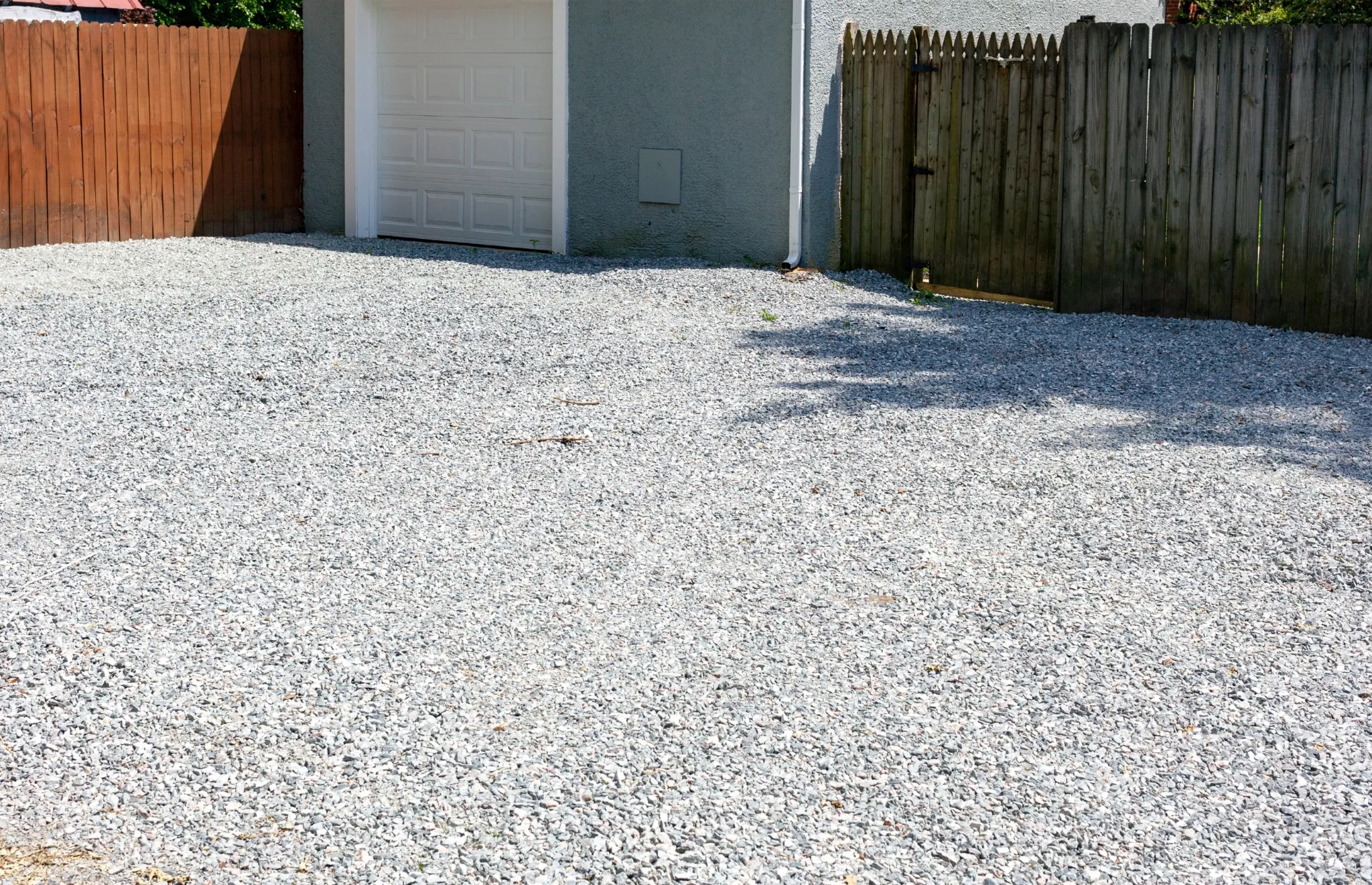
Best Gravel for Driveway: Expert Tips to Choose the Perfect Stone
Selecting the material for a new driveway is a critical decision that impacts aesthetics, maintenance, and long-term performance for any property. While options abound, a professionally installed gravel driveway offers a durable, cost-effective, and visually appealing solution. However, the longevity of the surface depends entirely on the quality of the materials selected and the precision of the installation process.
This guide provides a comprehensive overview of how to select the best gravel for driveway projects. It details the specific types of stone, the structural layers required, and the expert considerations that ensure a stable and long-lasting installation. By understanding the engineering behind a proper driveway, property owners can avoid common pitfalls such as rutting, washout, and poor drainage.
The Anatomy of a Proper Gravel Driveway
The Critical Sub-Base Layer
The foundation of a lasting driveway begins with a layer of large, angular stones, typically 3 to 4 inches in size, known as “crushed #1” or “surge.” This primary layer is installed directly on top of a geotextile fabric and serves as the structural backbone of the driveway. Its large voids allow for excellent drainage, ensuring that water does not pool beneath the surface, while the sheer size of the stones prevents them from sinking into the native soil under the weight of heavy vehicles.
The Intermediate Base Layer
Sitting directly atop the sub-base is the intermediate layer, which functions as the transition zone that locks the driveway system together. This layer is typically composed of #57 stone or a crushed run mixture, which combines roughly 3/4-inch crushed stone with stone dust. The angular nature of these stones allows them to wedge tightly into the voids of the sub-base below, creating a solid, stable mid-section that distributes the load of traffic evenly across the foundation.
The Top Dressing or Surface Layer
The final, visible component of the driveway system is the top dressing, which is chosen specifically for driving comfort and aesthetic appeal. This layer usually consists of a smaller, more uniform stone, such as #8 or #57 washed stone, which provides a smooth surface for tires and foot traffic. While this layer contributes to the visual finish of the project, it relies entirely on the stability of the layers beneath it to remain level and functional over time.
Understanding Stone Type: Angular vs. Round
The Necessity of Angular, Crushed Stone
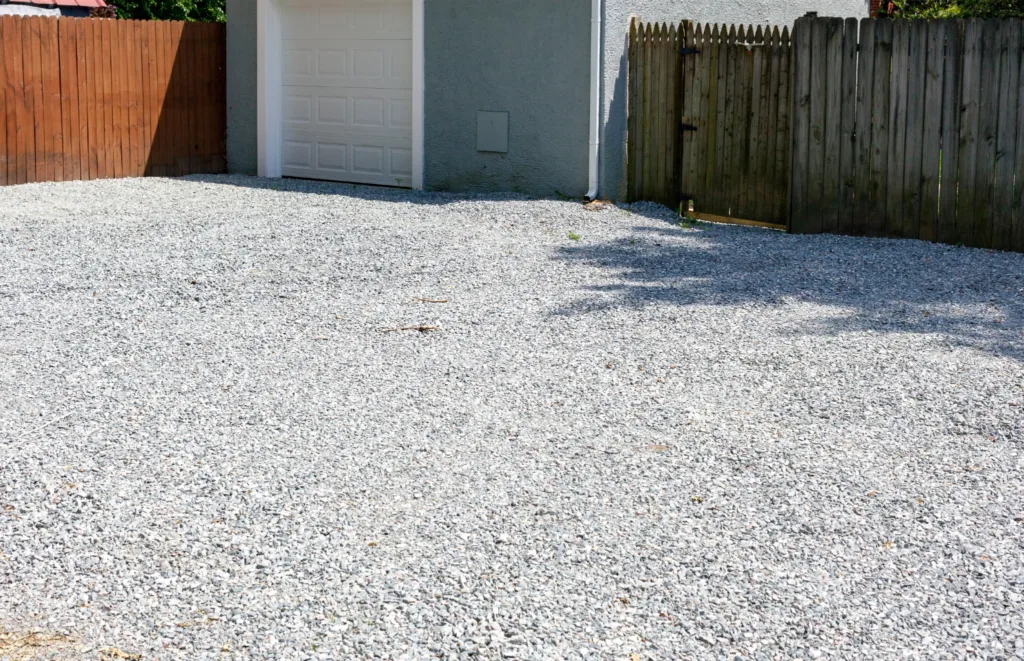
Professionally built driveways exclusively utilize crushed stone with angular, fractured faces rather than smooth stones. These sharp, irregular edges are essential because they interlock under the pressure of compaction and vehicle traffic to form a stable, immovable matrix. This mechanical interlocking creates a rigid surface that resists shifting, minimizing the development of ruts and potholes even under heavy use.
Why River Rock and Pea Gravel Are Unsuitable
Smooth, rounded stones such as pea gravel or river rock are widely considered poor choices for a driveway surface despite their decorative appeal. Because they lack sharp edges, these stones act like marbles, constantly rolling against one another under the weight of tires and never locking into place. This lack of friction leads to a continuously shifting surface that is difficult to walk on and prone to immediate displacement and rutting.
Load-Bearing Capacity and Compaction
The use of angular stones allows the driveway materials to be mechanically compacted to achieve a high density rating, known as Proctor density. By eliminating air gaps and forcing the stones to bond tightly together, contractors create a surface capable of supporting the significant weight of delivery trucks and passenger vehicles without displacement.
Choosing the Best Gravel for the Surface Layer
#57 Stone: The Industry Standard
#57 stone is widely regarded as the industry standard for driveway top dressing, featuring stones that are roughly the size of a nickel or quarter. This aggregate is an excellent choice because its size is substantial enough to stay in place under the friction of tires, yet small enough to provide a relatively smooth ride.
Dense-Grade Aggregates for a Firmer Surface
For homeowners seeking a surface that mimics the hardness of pavement, dense-grade gravel, often referred to as “crusher run” or “road base,” is the optimal selection. This material consists of a mixture of crushed stone and stone dust, which, when wetted and compacted, binds together to form a concrete-like surface. While it creates a very hard and semi-permanent roadway that generates less dust, it may require slightly more attention to drainage management as it is less permeable than washed stone.
Marble Chips and Decorative Stone
For properties requiring a specific aesthetic, high-end options like white marble chips, crushed granite, or trap rock offer a striking visual finish. While these decorative stones function similarly to standard crushed stone, they often come at a premium price point due to the costs associated with quarrying and transport. Homeowners should be aware that these specialized colors may require more frequent replenishment to maintain their pristine appearance compared to standard gray crushed stone.
The Professional Difference: Firm Foundations LLC’s Selection Process
Sourcing from Certified Quarries
Firm Foundations LLC ensures that all aggregates used in construction are sourced exclusively from reputable quarries that adhere to strict quality control standards. These quarries test their stone for proper hardness, durability, and mineral composition to guarantee that the material will not crumble or break down under heavy loads. This rigorous sourcing process ensures that the gravel maintains its structural integrity for years, rather than degrading into dust after a few seasons of use.
Geotechnical Considerations for Material Choice
The experts at Firm Foundations LLC assess the specific native soil conditions and the intended use of the driveway to recommend the optimal gravel size and type for both the base and surface layers. Factors such as high water tables, clay-heavy soil, or steep gradients influence which stone will perform best.
Ensuring Clean, Washed Stone
The team places a high priority on using washed stone, particularly for the top dressing layer, to ensure optimal performance and cleanliness. Unwashed stone often contains excessive amounts of quarry dust and silt, which can clog the voids between stones and inhibit proper drainage, leading to a muddy surface after rain.
Critical Factors Beyond the Gravel Itself
The Importance of Geotextile Fabric
A high-quality installation invariably includes a layer of heavy-duty woven geotextile fabric laid between the native soil and the gravel base. This synthetic barrier serves a dual purpose: it prevents the expensive gravel from sinking and disappearing into the soft subsoil, and it stops mud from migrating upwards into the stone layers. Without this separation fabric, the structural integrity of the driveway is compromised, leading to premature failure and potholes.
Proper Depth and Compaction
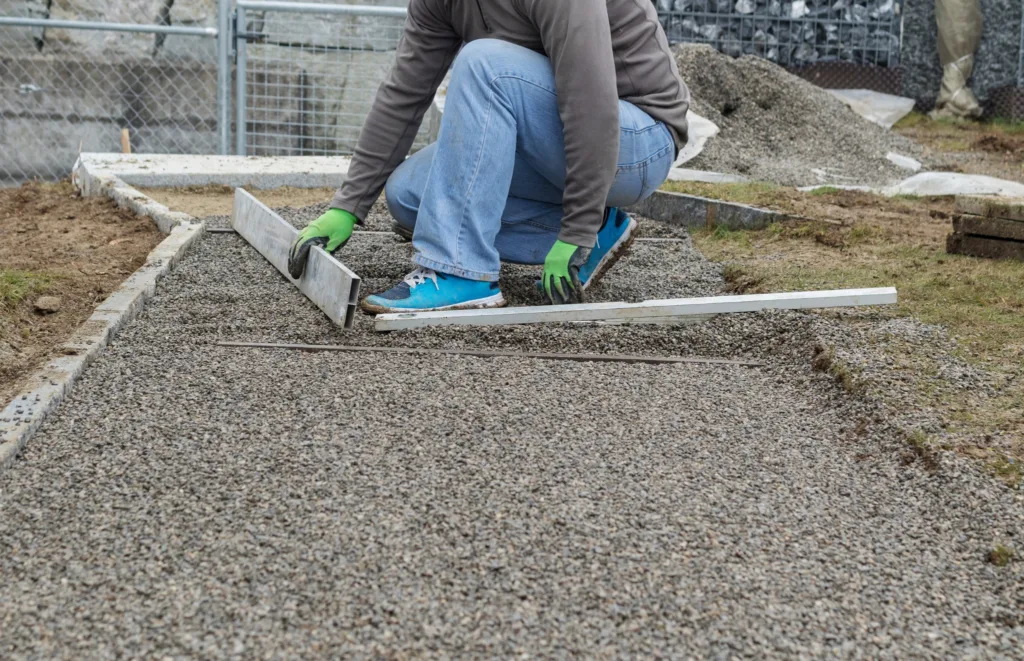
A durable residential driveway requires a minimum total depth of 8 to 12 inches of compacted gravel to support vehicle traffic adequately. This depth is not achieved by dumping stone all at once; rather, each layer must be installed and compacted individually using professional vibratory rollers. This layer-by-layer compaction ensures that the entire depth of the driveway reaches the required density, preventing future settling or shifting.
Grading for Positive Drainage
Even the highest quality gravel will fail if water is allowed to pool on the surface or erode the base. Professional installation involves precise grading to create a “crown” in the center or a gentle slope of at least 1/4 inch per foot to shed water off the sides. This positive drainage directs runoff away from the driveway and nearby buildings, protecting the investment from water damage and erosion.
Maintenance and Long-Term Care of a Gravel Driveway
Raking and Smoothing
To maintain a level surface, periodic raking is necessary to smooth out any low spots or ruts that may develop over time due to traffic patterns. This maintenance task helps redistribute the gravel that gets pushed to the edges of the driveway, ensuring a consistent layer of stone across the entire width. Raking is particularly important after heavy storms or periods of intense use to restore the driveway’s appearance and function.
Topping Off the Surface Layer
Over several years, the top layer of gravel will naturally settle, become displaced, or be pressed into the base, necessitating replenishment. Adding a fresh inch or two of top dressing every few years restores the clean look of the driveway and protects the base layers from direct traffic wear.
Controlling Weeds and Vegetation
Keeping a gravel driveway looking pristine requires proactive strategies for weed control to prevent vegetation from breaking up the surface. The use of landscape fabric underneath the gravel is the first line of defense, but airborne seeds can still take root in the dust between stones. Regular application of appropriate herbicides or environmentally friendly alternatives is recommended to keep the surface clear of grass and weeds.
Cost Analysis: Gravel vs. Asphalt and Concrete
Initial Installation Costs
Data consistently shows that a professionally installed gravel driveway is typically the most affordable paving option available to homeowners. The initial installation costs are significantly lower, often ranging from 50% to 70% less than an asphalt or concrete installation of the same dimensions. This lower barrier to entry makes gravel an attractive option for long driveways or properties with large parking areas.
Long-Term Maintenance Expenses
When evaluating the total cost of ownership, it is important to compare the cost of adding a top coat of gravel every few years against the maintenance required for hardscapes. Asphalt driveways require resealing every 3 to 5 years, and repairing cracked concrete can be an expensive and labor-intensive endeavor. In contrast, gravel maintenance is generally incremental and manageable, avoiding the large lump-sum repair costs associated with paved surfaces.
Return on Investment and Curb Appeal
A well-maintained gravel driveway, especially when finished with decorative stone, offers a rustic and upscale curb appeal that aligns well with many architectural styles. This aesthetic enhancement can provide an excellent return on investment by improving the property’s first impression. For many buyers, a crisp, crunchy gravel drive signals a classic country estate feel that rigid pavement simply cannot replicate.
Conclusion
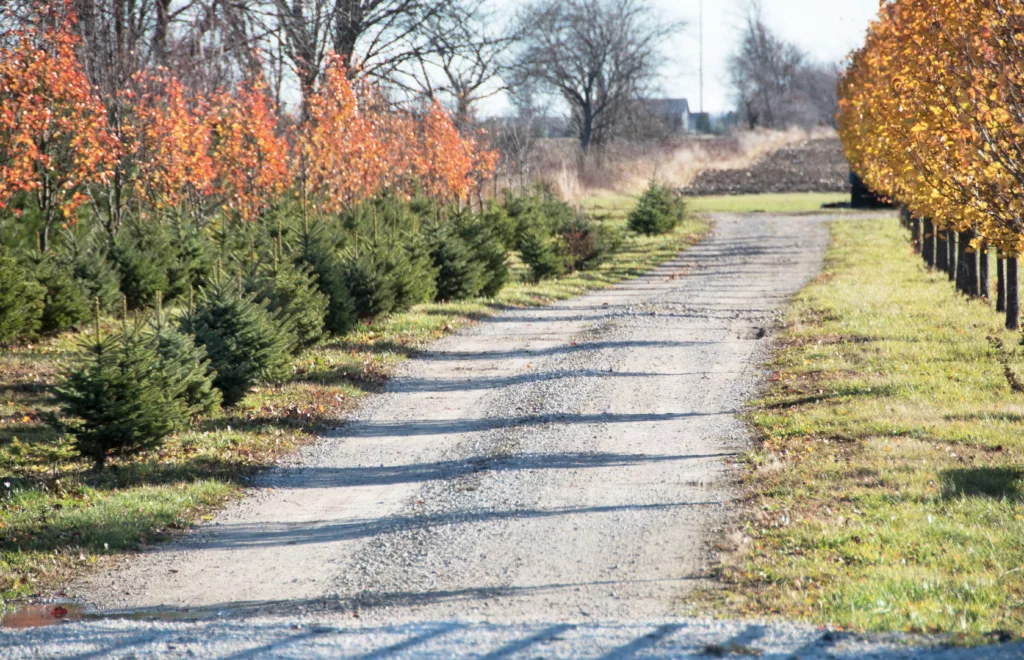
The selection of the best gravel for driveway installations is an engineered process involving distinct structural layers, specifically chosen stone types, and professional installation techniques. By prioritizing angular stone and proper base preparation, homeowners ensure a durable and attractive result that enhances the property. For an expert assessment and a driveway built with the highest quality materials and uncompromising standards, contact Firm Foundations LLC. The team builds foundations that last.
Firm Foundations LLC
https://maps.app.goo.gl/Uf6XdgtpBTETgNrr7
1535 White School Rd, Honey Brook, PA 19344, United States
(717) 716-7267
https://shedpads.com/