
Build Your 20 x 20 Garage Foundation in PA, MD, NJ
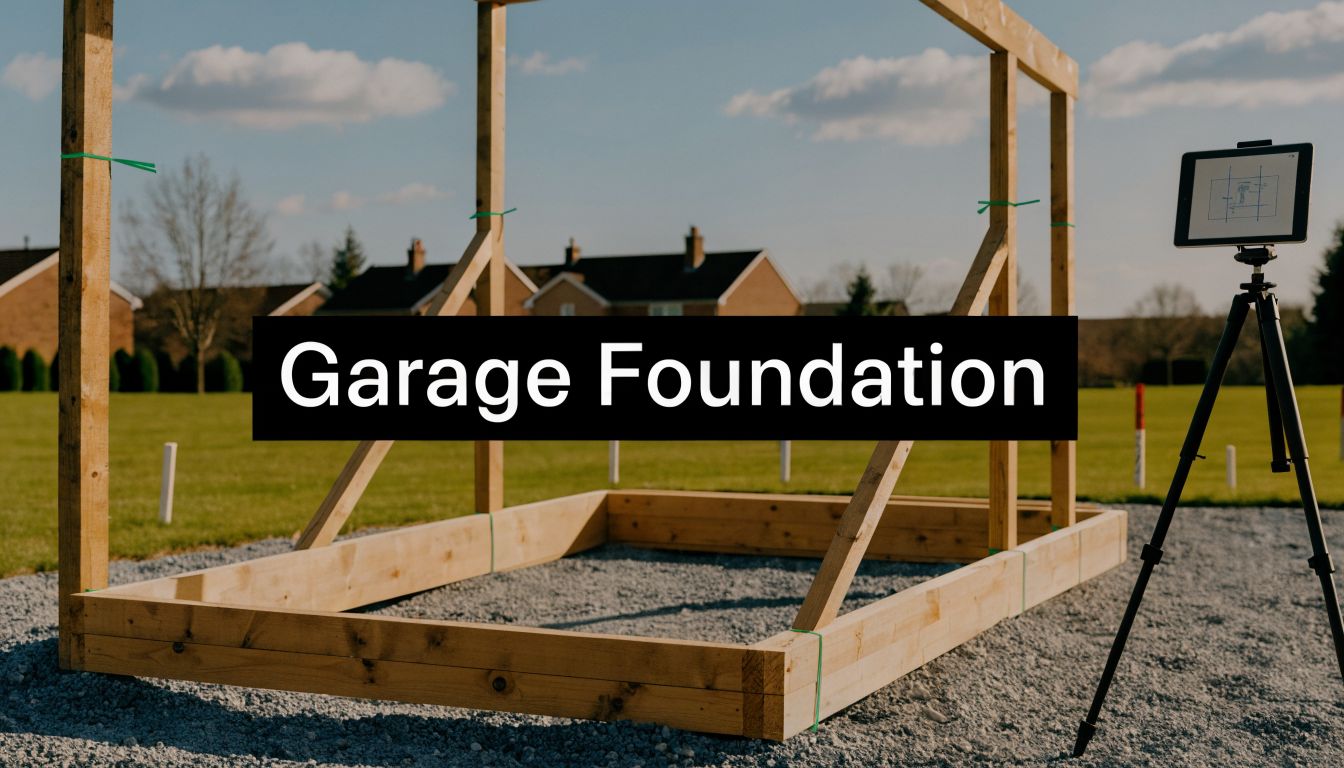
A lot of homeowners start a 20 x 20 garage project by thinking about the building first. They picture two cars inside, a workbench on the back wall, maybe some room for lawn equipment along one side. Then the harder question shows up. What needs to happen under that garage so it stays level, dry, and usable year after year in Pennsylvania or Maryland?
That’s the part that causes the most uncertainty. A garage can look great on day one and still develop problems if the base was rushed, the drainage was ignored, or the footing depth wasn’t matched to local frost conditions. In this region, those aren’t small details. They decide whether your slab stays solid or starts moving.
Homeowners searching for garage foundation contractors near me, concrete foundations, or garage footings and foundations usually want the same thing. They want a clear answer, fair pricing, and a foundation that won’t become a repair project later. That’s where practical planning matters more than sales talk.
Your Guide to Building a 20×20 Garage Starts from the Ground Up
A 20 x 20 garage gives you 400 square feet of floor space, which is why it remains such a common choice for homeowners who want a practical two-car setup with some extra flexibility. In the Mid-Atlantic region, that size works well because it balances usable room and manageable cost. In markets like Pennsylvania, Maryland, Delaware, and New Jersey, the foundation cost for a 400 square foot slab typically falls between $3,500 and $7,000, and contractors like Firm Foundations have been providing these installations since 2011 according to 20×20 garage size and regional cost data.
That number catches people off guard. Many homeowners budget for the garage kit, the doors, and the roofline, but they don’t realize the shed foundation or concrete foundation for garage often decides whether the whole project feels like a good investment.
What homeowners usually worry about
Most concerns are reasonable:
- Cracking and heaving: You don’t want a slab that shifts after the first hard winter.
- Water problems: A garage floor that stays damp becomes frustrating fast.
- Vehicle fit: A two-car layout has to work in real life, not just on paper.
- Hidden work: Excavation, grading, and compaction are easy to underestimate.
- Choosing the wrong base: A gravel shed foundation and a concrete slab don’t serve the same purpose.
A garage foundation should solve problems before the structure arrives. It shouldn’t leave the owner discovering them later.
That’s especially true in PA and MD, where freeze-thaw cycles, drainage patterns, and variable soils make shortcuts expensive.
Why the foundation deserves more attention than the building brochure
The structure sitting on top gets the attention because it’s visible. The base below it does the heavy lifting. If the soil wasn’t prepared correctly, if the gravel wasn’t compacted properly, or if water has nowhere to go, the garage inherits those problems immediately.
For homeowners looking for cement foundations for garage, shed foundations near me, or even a base for storage shed that might later support a larger outbuilding, the right first step is simple. Treat the foundation choice like a structural decision, not a line item.
A properly planned 20 x 20 garage starts with the site, the grade, the drainage path, and the footing depth. Everything else follows that.
Phase One Initial Site Assessment and Project Planning
Before any machine shows up, the site has to answer a few basic questions. Can equipment access the area without tearing up the rest of the property? Does the ground naturally hold water? Is the proposed garage location level, or will it need cut and fill work? Those answers shape the foundation type, the excavation scope, and the final cost.
What gets checked before work starts
A professional site review usually looks at the property in layers, not just the footprint where the garage will sit.
Access for excavation equipment
A clean layout on paper doesn’t help if a machine can’t reach the work area safely. Narrow gates, overhead lines, soft yards, and steep side access all affect planning.Slope and runoff direction
Water always tells the truth about a site. If runoff already moves toward the garage location, the grading plan has to reverse that.Soil behavior
Some ground compacts well and stays stable. Other soils hold moisture, pump under load, or shift seasonally. That changes how aggressively the base needs to be prepared.Setbacks and township requirements
In places like Honey Brook Township and nearby communities, zoning and setback rules can affect where a detached garage is allowed. It’s much easier to confirm that before excavation than after forms are set.Permit path
A permit isn’t red tape for its own sake. It protects the homeowner by making sure footing depth, location, and basic structural requirements match local code.
Why planning saves money later
The most expensive surprises usually happen before the concrete truck arrives. Homeowners often assume the site is straightforward until the crew finds soft subgrade, poor drainage, or a location that needs more excavation than expected.
That’s why experienced contractors slow down at the beginning. A rushed start often creates rework. A careful start usually creates a cleaner timeline.
Practical rule: If a contractor can price your 20 x 20 garage foundation without asking about slope, drainage, access, or permits, the quote probably leaves something out.
For homeowners who are also coordinating the structure installation, it helps to understand what a general contractor does so you know who is managing permits, sequencing, subcontractors, and site readiness. Even when a foundation contractor handles the pad or slab directly, project coordination still matters.
Local planning matters more than generic advice
Online guides often treat every garage site the same. They aren’t. A level lot in one part of Pennsylvania behaves differently than a sloped backyard in Maryland, especially after a wet season or a hard freeze.
That’s why local planning for garage footings and foundations, excavation near me, or concrete contractors should answer practical questions such as:
| Site question | Why it matters |
|---|---|
| Is the ground already draining away from the build area? | This affects moisture under and around the garage |
| Can the base be built without major fill? | Fill work changes compaction and cost |
| Is there enough room for equipment and material delivery? | Tight access slows the job and can affect methods |
| Are utilities nearby? | Existing lines can change layout and excavation |
| Is the final garage use basic parking or workshop use? | That influences whether gravel or concrete makes more sense |
A strong plan makes the build feel simple. Most of that simplicity comes from work the homeowner never sees.
Choosing Your Foundation Gravel Pad vs Concrete Slab
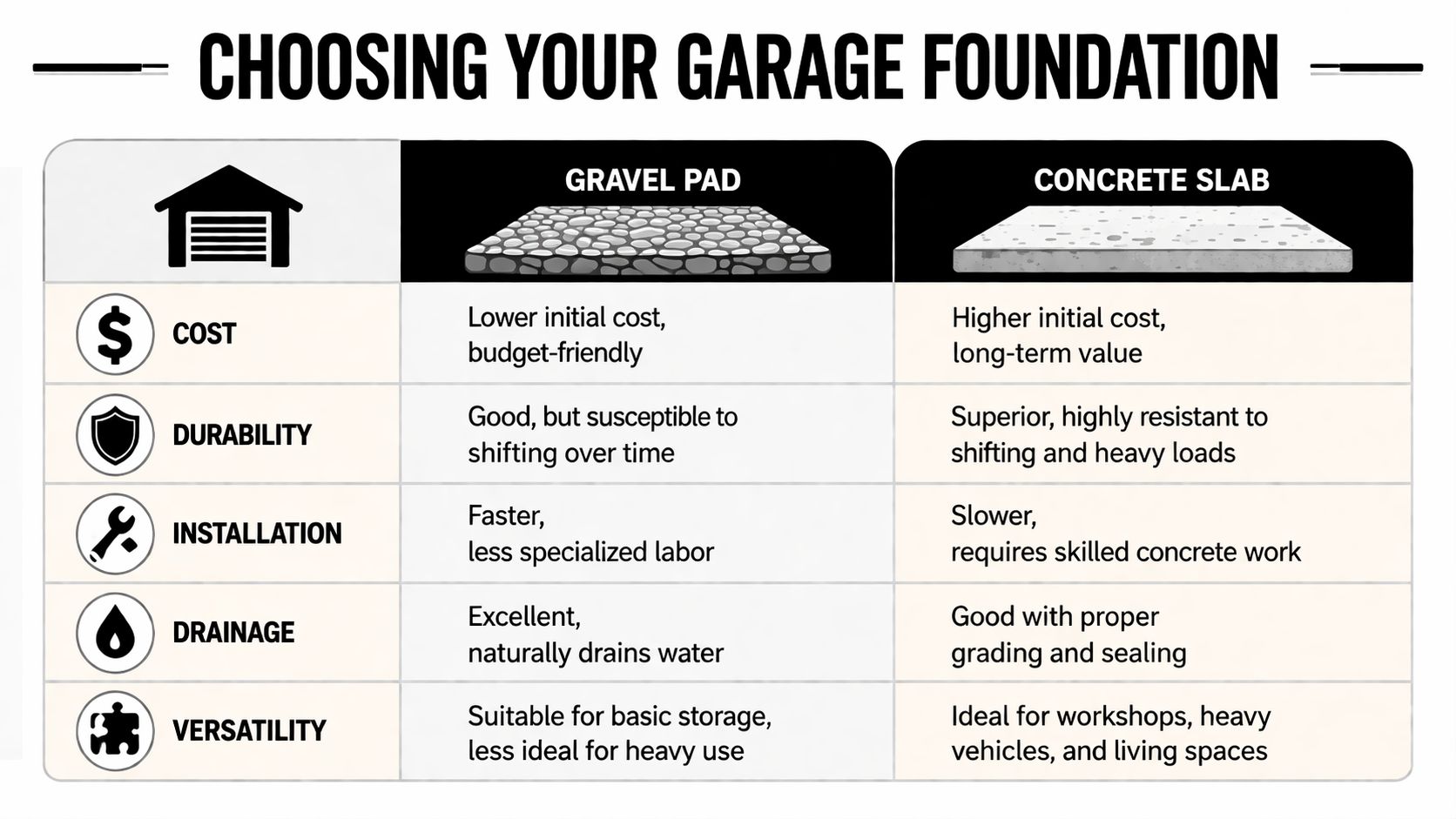
The biggest decision for a 20 x 20 garage isn’t the siding color or roof pitch. It’s the base. Homeowners usually narrow it to two options: a gravel shed foundation or a reinforced concrete slab. Both can work. They just don’t solve the same problem.
When a gravel pad makes sense
A gravel pad is often the right choice for a prefab garage, lighter-use outbuilding, or a project where drainage and speed matter most. It’s common for shed installations, smaller barn shed projects, and basic vehicle cover structures.
What works well with gravel:
- Water management: Gravel naturally sheds water and helps reduce standing moisture.
- Faster installation: There’s no concrete curing stage.
- Lower upfront cost: For many homeowners, that matters.
- Good match for prefab structures: Many modular buildings perform well on a properly built stone base.
Where gravel starts to fall short is finished-use expectation. If you want a hard, clean floor for a workshop, storage cabinets, rolling equipment, or regular vehicle maintenance, gravel feels limiting.
When a concrete slab is the better choice
A reinforced slab is usually the better fit when the garage will carry heavier use, act as a finished floor, or support long-term flexibility. If the garage may become part storage, part shop, or a more permanent extension of the property, concrete gives you a stronger platform.
A slab is usually the better choice when you want:
- A true floor surface for vehicles, tools, and storage
- Better support for heavy point loads
- Cleaner day-to-day use
- More versatility if your needs change later
- A stronger match for detached garages intended to last for decades
Gravel is a base. Concrete is both a base and a finished floor. That distinction matters more than people think.
Side-by-side trade-offs
Here’s the plain-language comparison most homeowners need:
| Consideration | Gravel pad | Concrete slab |
|---|---|---|
| Upfront budget | Lower | Higher |
| Drainage | Excellent if built correctly | Good if grading and drainage are handled correctly |
| Floor finish | Not finished | Finished surface |
| Heavy-use workshop potential | Limited | Strong fit |
| Installation pace | Faster | Slower because concrete work requires more steps |
| Long-term feel | Functional | More permanent |
Which one fits your project
If your garage will mostly shelter vehicles and store outdoor equipment, gravel may be enough. If you want a clean interior, regular hobby use, tool chests, shelving, or the option to upgrade the space later, concrete usually pays off in usability.
This is also where regional conditions matter. In Delaware and New Jersey, some sites drain beautifully and suit a gravel pad well. Others need a slab with stronger control over grade, moisture, and load support. The correct answer depends on use, not just price.
What doesn’t work
The trouble starts when homeowners mix expectations. A gravel base won’t behave like a slab just because the building on top looks substantial. A thin or poorly prepared slab won’t perform like a reinforced garage floor just because it’s concrete.
Those are different systems. They need to be chosen carefully.
For homeowners comparing shed foundations contractors near me, gravel shed foundation contractors near me, and garage foundation contractors near me, the useful question isn’t “Which is cheapest?” It’s “Which base matches the way this garage will be used five years from now?”
That question usually leads to a better decision.
The Build Process Excavation Grading and Forming
Once the plan is set, the job moves to the part homeowners usually notice first. Dirt gets moved. Grades start changing. Forms go in. This stage looks simple from the driveway, but it’s where many long-term problems either get prevented or built in.
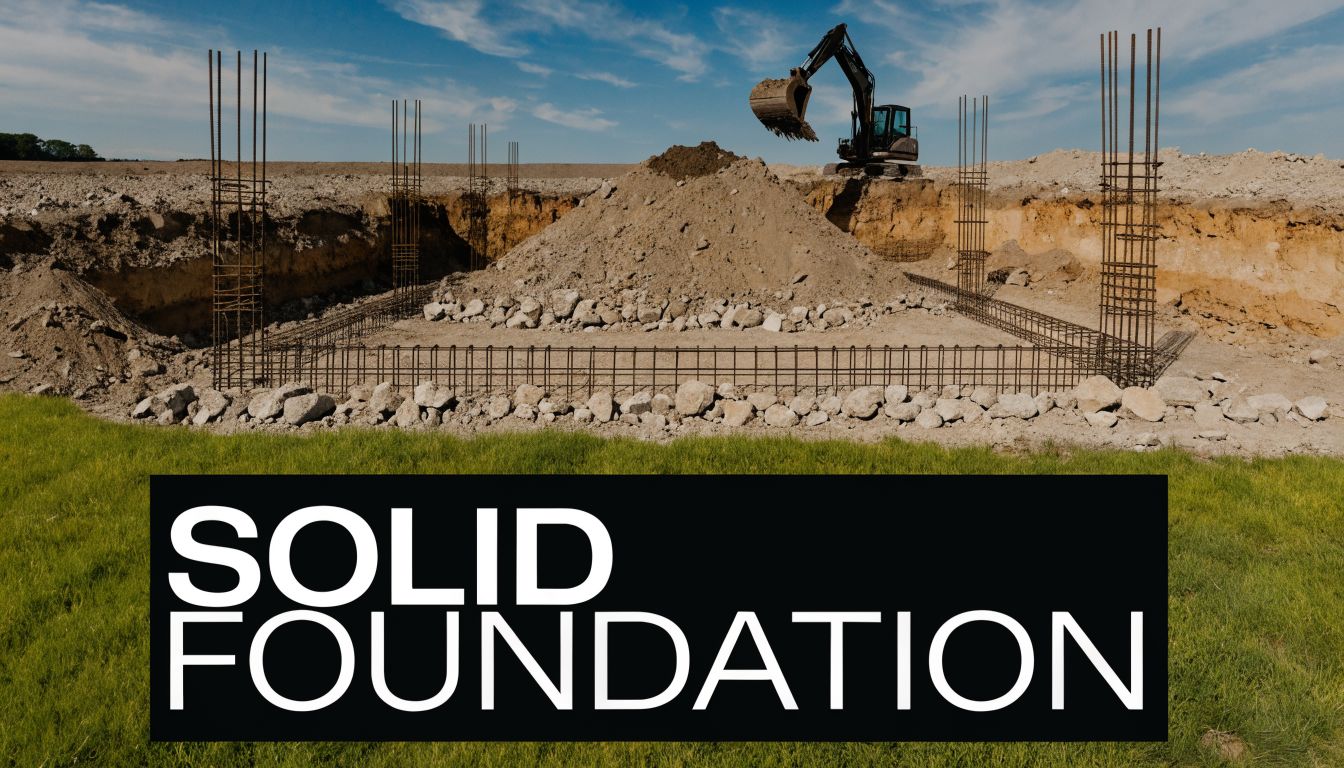
For a 20×20 garage foundation, the process includes excavating 12 inches below the finished slab, with a perimeter footing trench dug to local frost line depths of 36 to 48 inches. Squareness is checked using the 3-4-5 Pythagorean method, and the gravel base is compacted to 98% density to reduce settlement risk, because inadequate compaction accounts for 40% of all foundation failures according to garage foundation methodology from Fox Blocks.
Excavation has one job
Excavation creates room for the materials that support the garage. It’s not just digging a flat box in the yard. The crew has to remove unstable material, establish the correct depth, and prepare for footing and slab components that match the site.
On a typical 20 x 20 garage slab in PA or MD, the excavation has to account for:
- Finished slab elevation
- Gravel base thickness
- Footing depth below frost line
- Drainage direction away from the structure
- Any fill areas that need careful compaction
If the site slopes, the low side often needs extra attention. That’s where poor fill practices create future movement.
Grading decides how water behaves
Many garage problems are really drainage problems wearing a different label. Homeowners call about damp interiors, edge erosion, or slab issues, but the root cause often starts outside the building line.
Good grading sends water away from the garage. Bad grading lets water sit near the slab, soften the supporting soils, and increase freeze-thaw stress. That’s why the shape of the surrounding ground matters almost as much as the slab itself.
Water doesn’t need a big opening. If the site invites it toward the garage, it will keep coming back.
Forming is where accuracy shows up
A garage slab has to be square, level, and laid out to the actual structure dimensions. Small errors at this stage become larger headaches once the building crew starts setting walls, doors, and trusses.
Crews use stakes, strings, and diagonal checks to confirm the pad is square before concrete work begins. The old 3-4-5 rule still matters because it’s reliable. If the layout is off, garage doors, wall lines, and finished dimensions start fighting each other.
For homeowners who want a closer look at the sequence involved in a reinforced pad, this walkthrough on how to build a concrete pad is useful because it shows how preparation, forming, reinforcement, and finishing connect.
Compaction is not the place to cut corners
A lot of DIY problems start with material that looks compacted but isn’t. The base may seem firm on top, yet still have weak spots below. Once a vehicle load, seasonal moisture, and freeze-thaw cycles hit that area, the foundation can settle unevenly.
That’s why compaction gets treated as a measured step, not a guess. The gravel base has to be compacted thoroughly so the slab or pad rests on stable support instead of loose fill.
A short build video helps show what this phase looks like in real conditions:
What homeowners should expect on build day
The cleanest projects usually feel organized from the start. You should expect clear layout lines, visible grade control, and a crew that treats drainage as part of the structure, not cleanup after it.
If you’re hiring for concrete foundations, garage footings and foundations, or excavation near me, ask how the contractor handles frost depth, compaction, layout verification, and drainage slope. Those answers tell you far more than a quick price ever will.
Technical Specifications Reinforcement Thickness and Drainage
A 20 x 20 garage can look great on pour day and still develop cracks, edge settlement, or moisture trouble a few winters later. I see the long-term difference in the details below the finished surface. Steel placement, concrete thickness, and water control decide whether the slab just manages or stays serviceable for decades in Pennsylvania, Maryland, Delaware, and New Jersey.
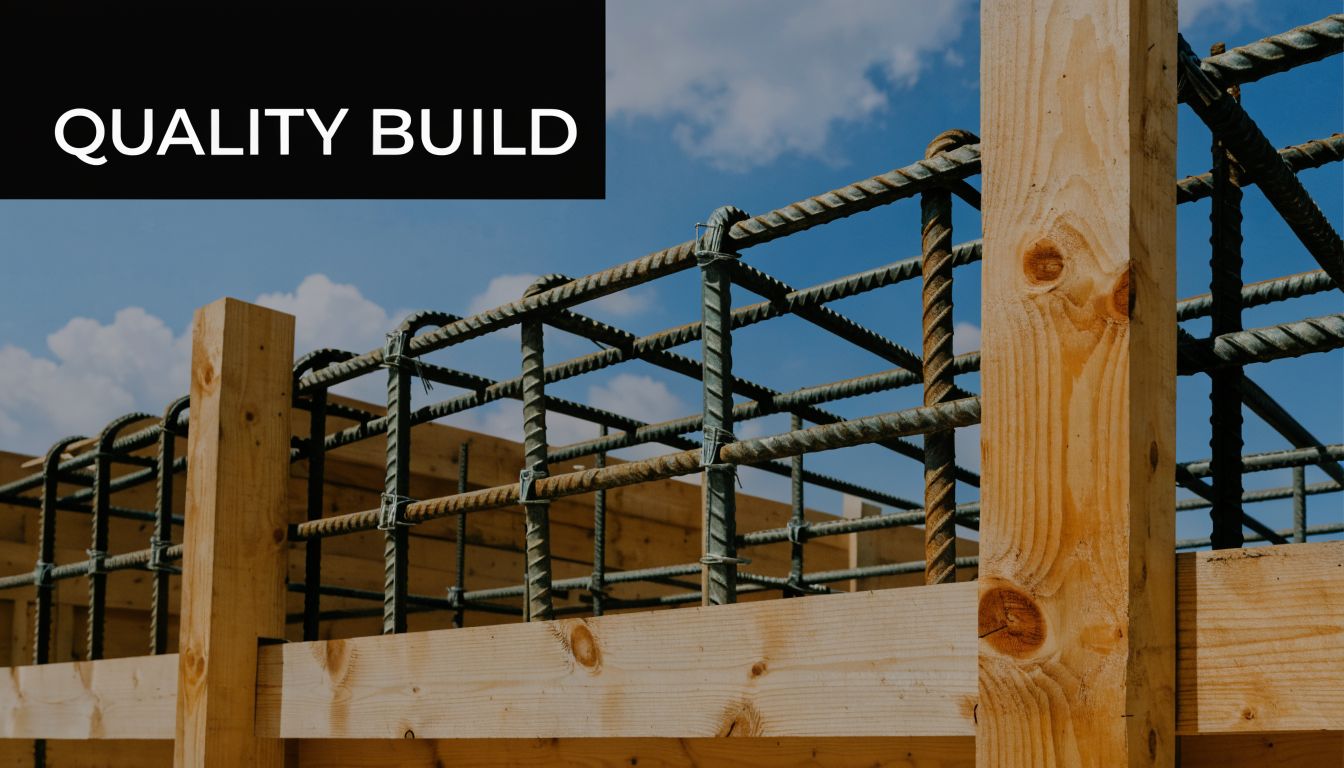
For a reinforced 20×20 garage slab in this region, quality usually means frost-depth footings that match local code, a #4 rebar grid at 18-inch centers, chairs that keep the steel 2 to 3 inches above the base, and a 4 to 6 inch slab using 4000 to 4500 PSI concrete over a compacted 4-inch gravel base. If you want a closer look at recommended garage slab thickness for vehicle loads and residential use, that guide covers the common ranges and where thicker sections make sense.
Why slab thickness matters
Thickness affects more than strength on paper. It changes how the slab handles parked vehicles, point loads from jacks or shelving, and the normal expansion and contraction that comes with seasonal temperature swings.
For many residential garages, 4 inches is the minimum range you will hear discussed. In practice, I tell homeowners to match slab design to how the garage will be used. A space that will hold heavier trucks, frequent equipment loads, or a workshop setup may justify a thicker slab or thicker edges. Pouring the same thin section everywhere can save money up front, but it leaves less margin for real-world use over the next 20 to 50 years.
Rebar placement matters as much as the rebar itself
The presence of “rebar” alone doesn’t guarantee a strong slab. Steel has to sit in the body of the concrete, not at the bottom where it does little to control cracking.
A #4 rebar grid at 18-inch centers is a common standard for this size garage. The bars should be supported on chairs so the pour surrounds them properly. If the crew drops the steel onto the gravel and pours over it, the slab loses much of the reinforcement you paid for.
I tell homeowners to ask one simple question before the truck arrives. How will the crew keep the steel in position during the pour? A solid answer usually says a lot about the rest of the installation.
The right material in the wrong position is still the wrong installation.
The gravel base supports the slab and controls moisture
Concrete performs best when the support underneath it is uniform. A compacted crushed stone base spreads loads more evenly and reduces the chance that one soft spot turns into a crack line later.
It also helps with drainage under the slab. That matters in our area, where freeze-thaw cycles and wet seasons can punish poorly prepared foundations.
Pay attention to these specifications:
- Stone type: Crushed stone compacts and locks together better than rounded gravel
- Base preparation: Topsoil, roots, and unstable material need to be removed before stone goes in
- Compaction quality: The base should be compacted in lifts so it is dense throughout, not just firm at the surface
- Uniform thickness: A base that varies too much can support one part of the slab differently from another
- Drainage path: Water needs a clear route away from the slab edges and surrounding soils
Drainage protects the slab edge and the soil below it
Poor drainage shortens foundation life. Water that ponds along the perimeter softens supporting soil, increases winter movement, and can wash fine material away over time.
A good garage foundation in PA, MD, DE, or NJ accounts for runoff before the first yard of concrete is placed. The finished grade should carry water away from the building. Downspouts, nearby slopes, driveway tie-ins, and low spots in the yard all affect how the slab will perform after the project is done.
For homeowners comparing shed foundations near me, concrete contractors, or a gazebo foundation and garage slab from the same crew, Firm Foundations handles excavation, gravel pads, and reinforced concrete foundations in the region with that same site-first approach.
Understanding Costs Timelines and Common Pitfalls
Homeowners usually ask two questions early. What will the project cost, and how long will it take? Both are fair questions. The trouble is that many garage estimates focus on the structure and leave the foundation work too vague.
For a mid-range 20×20 garage project in 2026, the average total is $29,000, with the 400 square foot concrete slab alone costing about $4,800 and site prep adding another $2,500 according to 2026 20×20 garage cost data. That same source notes the foundation expense often becomes a hidden cost that can equal or exceed the price of a basic garage kit.
Where homeowners get surprised
The surprise usually isn’t that a slab costs money. It’s that the slab includes several separate stages:
| Cost area | What it covers |
|---|---|
| Site prep | Clearing, access, grading, and excavation-related setup |
| Foundation work | Base prep, forming, reinforcement, and concrete |
| Drainage-related adjustments | Grade corrections and water management needs |
| Permit-related tasks | Local compliance steps that affect schedule and scope |
That’s why a quote that only talks about “the pad” can be misleading.
Timelines are driven by conditions, not wishful thinking
A 20 x 20 garage base can move quickly when the site is straightforward and the weather cooperates. It slows down when access is tight, the grade needs correction, or conditions are wet. Concrete work also has sequencing requirements. Excavation, base prep, forming, reinforcement, pouring, and curing each need their own space in the schedule.
A realistic timeline is usually a sign of professionalism. An overly aggressive promise often means somebody is skipping a step or assuming the site will behave perfectly.
Cheap prices and rushed schedules often come from the same place. Missing work.
Common mistakes that cause expensive problems
The most common avoidable issues are simple:
- Underbudgeting the foundation: Homeowners price the garage kit but not the base that supports it.
- Ignoring permits: That can create delays or force changes after work begins.
- Choosing by price alone: A low quote may exclude compaction, drainage work, or sufficient excavation.
- Hiring without confirming insurance and scope: If the responsibilities are vague, the surprises usually aren’t.
- Treating every site the same: A flat dry lot and a sloped wet lot don’t cost the same to build correctly.
If you’re comparing garage foundation contractors near me, driveway contractors near me, or concrete foundations for multiple site improvements, ask for an all-in explanation of what the base includes. That’s how you avoid discovering missing work after the project has started.
Start Your Project with a Firm Foundation
A 20 x 20 garage is a practical size. It gives you real usable space, room for vehicles, and flexibility for storage or hobby use. But the part that determines whether it stays useful over time is the part below it.
In Pennsylvania, Maryland, Delaware, and New Jersey, the right foundation has to account for frost depth, drainage, soil behavior, compaction, and the way you plan to use the garage. A gravel pad can be the right answer for some builds. A reinforced concrete slab is the better answer for others. What matters is matching the foundation to the job instead of forcing the cheapest option onto every site.
If you’re planning a new garage and want clear guidance before committing, get the site evaluated first. That one step usually prevents the most expensive mistakes and gives you a much more accurate picture of timeline, cost, and foundation type.
If you’re ready to price out a 20 x 20 garage base, request a quote from Firm Foundations. A clear estimate, honest site review, and properly planned foundation make the rest of the garage project much easier.