
Your Guide to Building a 2 Car Garage in Honey Brook, PA
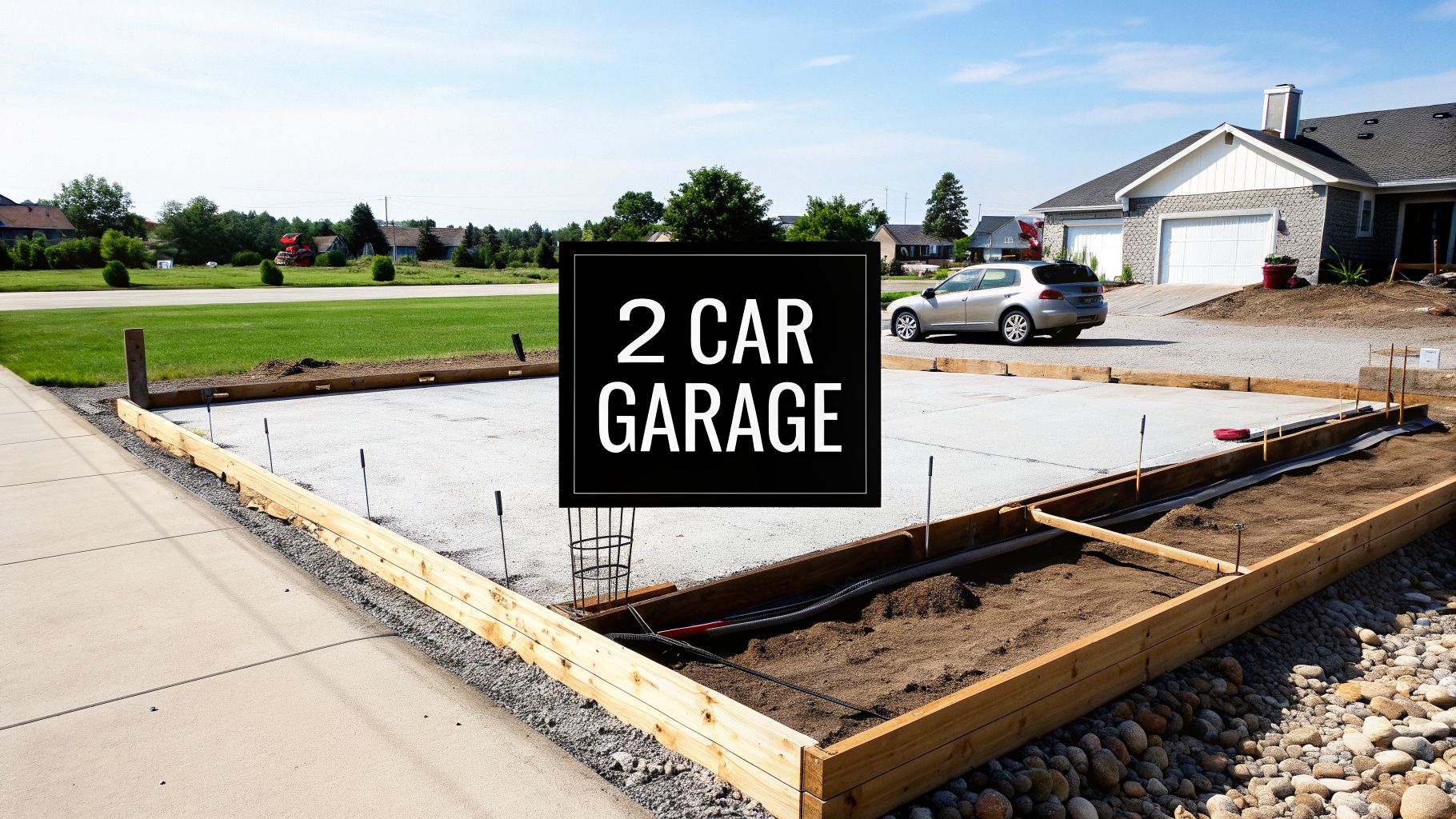
When you’re thinking about adding a garage, it’s a big decision. But for most homeowners we talk to in Honey Brook, Pennsylvania, and our surrounding service areas, a 2-car garage just makes the most sense. It’s become the modern standard for a good reason—it gives you that perfect mix of parking space, workshop potential, and a real bump in your property’s value.
Why a 2-Car Garage Is Such a Smart Move for Your Home
Across our local community—from Chester County to neighboring towns in Maryland and Delaware—adding a quality garage is one of the most practical upgrades you can make. A single-car garage often feels tight from day one, and a three-car can be overkill for many lots and budgets. The 2-car garage, however, hits that sweet spot. It gives you enough room for two family vehicles, keeping them safe from our unpredictable four-season weather, with plenty of space left over.
This isn’t just a local trend. Back in 2022, a whopping 66% of all new single-family homes built in the U.S. came with a two-car garage. It’s clearly the top pick for today’s families.
But let’s be honest, a garage is so much more than just a place to park. It’s a blank canvas for your home and your lifestyle.
More Than Just Parking
Think of your new garage as an extension of your home. Sure, it keeps your cars clean and secure, but a well-built 2-car garage from Firm Foundations can do so much more:
- Real Storage Space: Finally, you can reclaim your basement or attic! It’s the perfect spot for lawn equipment, bikes, holiday decorations, and all your outdoor gear.
- Your Own Workshop: Imagine having a dedicated space for woodworking, car maintenance, or any hobby that needs a bit of elbow room and a place for your tools.
- Boosts Home Value: A sharp-looking, functional garage isn’t just practical; it’s a huge plus for curb appeal and a major selling point that increases your property’s market value.
To get the most out of your investment, the first step is figuring out the perfect size for a 2 car garage for your specific needs. Whether you’re parking two small sedans or a couple of big SUVs, getting the dimensions right from the start makes all the difference.
Before you start picking out sizes, let’s take a look at some of the most common dimensions and what they’re best suited for.
Quick Guide to Common 2-Car Garage Dimensions
This table should help you visualize which size might work best for your vehicles and storage goals. It’s a great starting point for planning your project with us.
| Dimension | Square Footage | Best For |
|---|---|---|
| 20×20 | 400 sq. ft. | The classic compact option. Best for two smaller cars with minimal extra storage needs. |
| 24×24 | 576 sq. ft. | The most popular choice. Comfortably fits two mid-size SUVs or trucks with room for a workbench or mower. |
| 24×30 | 720 sq. ft. | A more spacious option, ideal for larger vehicles plus significant room for storage shelves or a workshop. |
| 28×32 | 896 sq. ft. | The “deluxe” size. Perfect for oversized trucks, boat storage, and a fully equipped workshop area. |
No matter which size you land on, remember that a bigger footprint gives you more flexibility now and in the future.
The Foundation Is Everything
Here’s the part we can’t stress enough. No matter what size you choose or how you plan to use it, the long-term success of your garage all comes down to one thing: the foundation.
A weak or poorly built base will inevitably lead to problems—cracking, shifting, and water damage that can turn your dream project into a nightmare of costly repairs. Whether you’re getting a prefab kit or a custom-built garage, that structure is only as solid as the ground it sits on.
At Firm Foundations, we believe a garage project should be exciting, not stressful. That’s why we focus all our energy on getting the most important part right—the foundation. A solid, professionally built garage foundation is your guarantee that the investment you’re making today will be secure for decades to come.
As your local garage foundation contractors near me, we specialize in the two most reliable types of bases: tough gravel pads and reinforced concrete slabs. Our team knows exactly how to prep your site, ensuring perfect drainage and a level surface that’s built to last. We handle everything from the initial digging to the final finish, making it a seamless process for homeowners throughout Honey Brook, PA, and our neighboring communities.
Investing in a professional foundation isn’t just another expense; it’s the first and most critical step toward building a garage you’ll love for years to come.
Choosing the Right Foundation for Your 2-Car Garage in Honey Brook
Let’s talk about the unsung hero of any great 2-car garage project: the foundation. While it’s easy to get excited about paint colors and door styles, the base your garage sits on is what guarantees its stability and longevity. Honestly, it’s the most critical decision you’ll make, and getting it right from the start saves you from serious headaches down the road.
Here at Firm Foundations, we’ve seen it all, and as your trusted shed foundations contractors near me, we specialize in the two most reliable options for homeowners in Pennsylvania, Maryland, Delaware, and New Jersey: durable gravel pads and reinforced concrete foundations. The best choice really boils down to how you plan to use your new space.
We put together this simple flowchart to help you visualize how your intended use—whether it’s for parking, extra storage, or building a dream workshop—points you toward the perfect foundation.

As you can see, the more you ask of your garage, the more robust its foundation needs to be. Let’s break down the two main options we proudly offer our neighbors.
Gravel Pads: A Smart and Cost-Effective Base
Think of a gravel pad as a firm, breathable mattress for your garage. It’s a fantastic, budget-friendly solution, especially for those popular prefab or modular garage kits. As experienced gravel shed foundation contractors near me, we see this as the go-to choice for a huge number of standard garage and shed projects in the Honey Brook area.
The process is straightforward. We start with excavation, grading your site precisely to ensure water runs away from your garage. After setting up a solid perimeter, we lay down and professionally compact crushed stone, creating a perfectly level and incredibly stable base for your storage shed or garage.
The real-world benefits of a gravel pad are hard to ignore:
- Excellent Drainage: The stone naturally lets water filter through, which is a huge deal in our often wet climate. It prevents water from pooling and minimizes the risk of frost heaves pushing your garage out of place.
- Cost-Effectiveness: A shed foundation gravel base is almost always more affordable than a concrete slab. This can free up a good chunk of your budget for other parts of the project.
- Faster Installation: There’s no waiting around for concrete to cure. The installation is quick, meaning your garage builder can get to work much sooner.
If your plan for a 2-car garage is mainly for parking vehicles and storing general household items, a professionally installed gravel pad from Firm Foundations is often the perfect, no-fuss solution.
Reinforced Concrete Slabs: The Ultimate in Durability
If a gravel pad is the mattress, a reinforced concrete slab is like building your garage on bedrock. It offers unmatched strength and gives you a perfectly smooth, solid floor, turning your garage into a true extension of your home. As one of the premier garage foundation contractors near me in PA, we always recommend a concrete slab for homeowners who want maximum performance and longevity.
For this, we build out concrete forms, install a grid of steel rebar for serious reinforcement, and then pour a high-strength cement foundation for your garage. The final step is expertly finishing the surface so it’s hard, level, and ready for anything. This is the gold standard for garage footings and foundations.
A reinforced concrete slab isn’t just a floor; it’s a permanent structural component of your property. It provides the strength needed to support heavy vehicles, car lifts, extensive workshop equipment, and anything else you can imagine for your space.
A concrete slab is the clear winner if you plan to:
- Create a Workshop: That smooth, easy-to-clean surface is a dream for rolling around tool chests, setting up workbenches, and tackling messy projects.
- Store Heavy Equipment: It can easily support the weight of heavy-duty trucks, tractors, or even a vehicle lift without you ever having to worry about settling or cracking.
- Finish the Interior: A concrete slab provides a solid, moisture-resistant base that you can later seal, paint, or cover with flooring for a truly polished look.
While it does represent a larger upfront investment, the sheer durability and versatility of a concrete foundation for a garage are second to none. For a closer look at the different types, you can explore the top 5 choices for a garage foundation and see which one lines up with your goals.
A Look at Our Garage Foundation Building Process

So, what does it actually look like to have your 2 car garage foundation built by the Firm Foundations team? We believe you should know exactly what to expect, from our first conversation until the job is done. Our process is designed to be straightforward and reassuring, giving homeowners in Honey Brook, PA, and the surrounding regions complete confidence that their project is in expert hands.
It all starts with a simple conversation about your vision for your property.
Step 1: Initial Consultation and Site Evaluation
First things first, we’ll have a detailed chat to understand exactly what you need. Are you planning a simple garage for two cars, or do you envision a heavy-duty workshop? Once we’re clear on your goals, we’ll schedule a time to come out to your property, whether you’re in Pennsylvania, Maryland, Delaware, or New Jersey.
During this on-site visit, we’re looking at a few critical factors:
- Soil Conditions: We’ll check the soil to determine the best foundation approach.
- Property Grade: Measuring the slope is key to planning the right amount of excavation.
- Site Access: We’ll find the best path for our equipment to minimize disruption to your home.
- Drainage: We look at how water naturally flows across your property to ensure the new foundation won’t cause issues.
This first step is all about gathering the details needed to give you an accurate, no-surprises quote built specifically for your project.
Step 2: Meticulous Site Prep and Excavation
With a solid plan in place, our crew gets to work. This is where the physical transformation starts, and it’s the most important stage for ensuring your garage stands the test of time. As your local excavation near me experts, we handle this part with absolute precision.
Using professional-grade equipment, we clear and level the area for your new garage foundation. Our team carefully excavates to the required depth, removing topsoil and any other unsuitable material. We then grade the site with a slight, calculated slope, which is crucial for directing rainwater away from the garage and your home’s foundation. For a deeper dive into these critical first steps, check out this expert guide to excavation and foundation.
Step 3: Forming and Steel Reinforcement
Once the ground is perfectly prepped, we build the skeleton of your foundation. For a concrete slab, this means setting up sturdy concrete forms. These wooden frames act as a mold, defining the exact shape and dimensions of your garage foundation.
Next comes the steel rebar. We lay a crisscrossing grid of steel reinforcement inside the forms. This step is non-negotiable for a durable concrete foundation for a garage. This steel gives the concrete incredible tensile strength, helping it resist cracking from the weight of your vehicles or seasonal temperature swings.
This steel skeleton is what makes the difference between a simple concrete pad and a true structural foundation built to last for decades.
Step 4: The Concrete Pour and Finish
With the forms and rebar ready, it’s time to pour. We use a high-strength concrete mix, delivered right to your site. Our team works it carefully into the forms, making sure it fills every corner. Then, we use specialized tools to level the concrete, remove air pockets, and create a solid, flat surface.
The final finish is just as important for the look and longevity of your cement foundation for a garage. We expertly trowel the surface to get it just right, whether that’s a broom finish for good traction or a perfectly smooth surface for a workshop. These precise foundation builds are exactly what we specialize in, providing peace of mind for homeowners across our community.
Estimating Your Garage Project Costs and Timeline
Alright, let’s get down to the two questions on every homeowner’s mind: “How much is this going to cost?” and “How long will it take?” Planning a 2 car garage is a big step, and understanding the investment in both time and money is critical. Here at Firm Foundations, we believe in being upfront with our neighbors from the very beginning.
While every property is unique, we can give you a solid ballpark estimate for our service areas in Pennsylvania, Maryland, Delaware, and New Jersey. This helps you plan with confidence long before you receive a firm, no-obligation quote from our team.
Key Factors That Influence Your Project Cost
The final price tag on your garage foundation comes down to a few key variables. As your local garage foundation contractors, we look at each of these closely during our first visit to your property to give you the most accurate number possible.
The main cost drivers we see are:
- Foundation Type: As we’ve covered, a gravel pad is almost always the more budget-friendly option compared to a reinforced concrete slab. The materials and labor needed for a concrete foundation for a garage are more involved, and the cost reflects that.
- Garage Size: This one’s straightforward. A standard 24×24 garage foundation will cost less than a larger 28×32 slab because it requires fewer materials and less time to build.
- Site Accessibility: If we can get our equipment right to the work area, things move smoothly. Tight spaces or steep hills can sometimes add to the labor cost.
- Excavation and Grading Needs: A flat lot is the dream scenario. If your property has a slope, we’ll need to do more significant digging and grading to create that perfectly level base, which can influence the final cost.
With the garage construction industry growing, it’s more important than ever to find reliable concrete contractors who can expertly build the strong cement foundations for garages that homeowners need.
What to Expect for Your Project Timeline
Just like the cost, the timeline depends on your specific site and the foundation you choose. Still, we can give you a general idea of how long each phase usually takes. We take pride in working efficiently to keep disruption to your property at a minimum.
Here’s a general breakdown of what to expect from our team:
- Gravel Pad Installation: For a standard 2 car garage on a mostly level site, putting in a gravel pad is a fast process. From excavation to final compaction, we can often get this done in just 1-2 days.
- Concrete Slab Installation: A reinforced concrete slab is a multi-step job. The site prep, building the forms, and pouring the concrete usually takes about 2-4 days.
- Crucial Concrete Curing Time: This is a step you cannot rush. After the slab is poured, it needs time to cure and gain its full strength before it’s ready for construction. This curing period takes at least 7 days.
What does this mean for your schedule? For a gravel pad, your garage builder can often get to work within a few days of us finishing. For a concrete slab, the total time from when we start until the foundation is ready for construction is typically about one to two weeks.
Understanding what goes into your investment is key. If you’re leaning towards a concrete slab, our guide on the cost of a concrete slab foundation breaks down the pricing in more detail. We’re committed to total transparency, making sure you know exactly what you’re paying for: a durable, professionally built foundation that will stand the test of time.
Navigating Local Permits and Avoiding Costly Mistakes
Building a new 2-car garage is exciting, but a successful project involves more than just a skilled construction crew. You also have to navigate local rules and regulations. This part of the process can feel like a headache, but as your local construction partner, we’re here to help you get it right from the start, saving you from fines, delays, and frustration.
As the go-to foundation and excavation experts in Pennsylvania, Maryland, and Delaware, we’ve dealt with countless townships. We understand their rulebooks and can guide you through the process so your project is done right, on time, and completely up to code.

Understanding Local Permitting Requirements in Honey Brook
In most of the areas we work, including Honey Brook, you’ll need a building permit for any new structure over a certain size—usually 100 to 200 square feet. Since even a smaller 2-car garage easily tops 400 square feet, you can be sure a permit will be required for your shed foundation or garage project.
While specifics can change from one town to the next, building departments almost always focus on a few key things:
- Property Line Setbacks: This is how far your garage must be from your property lines and your house. It’s a non-negotiable zoning rule to ensure safety and access.
- Impervious Surface Limits: Many towns limit how much of your lot can be covered by surfaces that don’t absorb water, like driveways and concrete foundations. This helps manage stormwater runoff.
- Engineered Plans: For larger garages or complex sites, the township might require plans stamped by a licensed engineer to verify that the design is structurally sound.
Figuring all this out is part of our job. We help our clients get a clear picture of what’s needed for their specific property, ensuring paperwork is in order before we break ground.
Common (and Costly) Mistakes to Avoid
Over the years, we’ve been called in to fix projects gone wrong. The frustrating part is, nearly every problem could have been prevented by doing things right the first time. The biggest issues almost always come from cutting corners on the build.
Your foundation isn’t just a slab of concrete or a pad of gravel; it’s the anchor for your entire investment. A mistake here doesn’t just cause a crack—it can compromise the whole garage structure, leading to problems that are incredibly expensive to fix later on.
Here are the top three mistakes we see and how we ensure they never happen on our watch:
-
Poor Site Preparation: The most common blunder is failing to properly excavate and grade the site. If the ground isn’t perfectly graded, water will pool around or under your foundation, leading to erosion and frost heaves. As your local excavation near me pros, we are obsessed with creating a level base with the right slope to channel water away from your investment.
-
Choosing the Wrong Foundation: Picking a foundation on price alone is a recipe for disaster. A simple gravel pad is fine for a lightweight prefab shed, but it’s wrong for a heavy-duty workshop. We help you choose the right garage footings and foundations based on your soil and how you plan to use the garage, ensuring the base is perfectly matched to the building.
-
Skipping or Skimping on Reinforcement: Forgetting to add steel rebar to a concrete foundation for a garage is a critical mistake. Concrete has incredible compressive strength but poor tensile strength. Without steel reinforcement, the slab is far more likely to crack. We always install a grid of steel rebar in our cement foundations for garages to give them the strength needed to last for decades.
Ready to Build Your 2-Car Garage? Start with the Right Foundation.
You’ve done the research and can already see how a new 2-car garage will improve your property. Now it’s time to turn that vision into a solid reality. Whether it’s for protecting your vehicles, creating a workshop, or just getting some much-needed storage space, this project is a major investment in your home.
But that investment’s long-term value comes down to one thing: a professionally built foundation. At Firm Foundations, we’ve seen it time and again—a garage is only as good as the base it sits on. A poorly prepared foundation can quickly lead to shifting, water damage, and structural headaches.
We Lay the Groundwork for Your Garage
Our goal is simple: to give you a durable, perfectly level garage foundation that ensures your new building will stand strong for years. Whether you’re leaning toward an economical gravel pad or the unmatched strength of a reinforced concrete foundation, our team has the hands-on experience to do it right. We proudly serve homeowners across Honey Brook, Pennsylvania, and into Maryland, Delaware, and New Jersey.
We quite literally lay the groundwork for your project’s success. We take care of all the critical site prep, excavation, and construction, so your garage starts on a solid footing and you get total peace of mind.
Getting started is straightforward. Let our team handle the details of creating a stable, level, and properly graded base for your 2-car garage. You can focus on the exciting parts of the project, knowing the most important step is in expert hands.
Take the next step with confidence.
Request Your Free, No-Obligation Quote Today!
Or Call Us Directly at (717) 627-2062 to Discuss Your Project!
Answering Your Top Garage Foundation Questions
Building a new 2-car garage is a major step, and it’s normal to have questions before you break ground. To help you feel confident, we’ve put together answers to some of the most common things homeowners ask our team in Honey Brook and our service areas.
Do I Need a Gravel or Concrete Foundation for My Prefab 2-Car Garage?
Both are great choices, but the best one depends on how you plan to use the space. For most standard prefab garages intended mainly for parking cars, a gravel pad is an excellent, cost-effective solution. Its fantastic drainage is a real lifesaver in our local climate.
However, if you’re dreaming of a workshop, need to support heavy equipment, or just want a perfectly smooth floor, a reinforced concrete foundation is the better long-term investment. It’s all about durability and function. We can walk you through the pros and cons for your specific property during a free site visit.
How Much Space Is Needed Around a 24×24 Garage for Construction?
To ensure a safe and efficient installation, we ideally need 3 to 5 feet of clear, accessible space around the entire perimeter of the foundation. This clearance is essential for our crew and equipment; it gives us the room to operate excavators and set up concrete forms without any issues.
This buffer zone also lets us perform proper grading, which is key to steering water away from your new foundation and protecting your investment. When we come out for the initial site assessment, we’ll take a close look at your property and discuss any potential access hurdles.
We see sloped properties all the time across our service areas. It’s a common challenge that our expert team handles every day. It just calls for a more specialized approach to site prep, ensuring your garage is built on a solid, level base.
Will My New Garage Foundation Affect Property Drainage?
Yes, any new building can change how water moves across your yard, which is why professional site preparation is so important. Ensuring proper drainage is one of our top priorities on every project.
We meticulously grade the site to create a gentle slope, channeling water away from your new 2-car garage and, just as crucial, away from your home’s main foundation. With a gravel pad, the stone provides incredible natural drainage. For concrete foundations, we make sure the surrounding landscape is perfectly shaped to prevent any pooling, stopping erosion and future moisture problems in their tracks.
Ready to lay the groundwork for your new garage? The team at Firm Foundations is here to get you started with a durable, professionally built foundation that will stand the test of time.